In the sampling of ancient cultural traditions in Part I of this essay, it could it be seen that, for hundreds and thousands of years, people have associated Omega-3-rich fish with desirable life factors like physical health, mental health, happiness, prosperity, fertility, and luck. It also emerged that people have linked fish with mystical, occult, or esoteric knowledge or abilities. This is implicit throughout the traditions in that fish are associated with magical transformations and spiritual faith, but it is made explicit in the case of story of the astrological sign Pisces, the Capricorn’s tail, and the Quranic story of the revivified fish representing mystical knowledge.
It is also striking how often the ancient narratives involve
two fish or the meeting of two things to become one fish. This can be seen in the Taoist Yin Yang
symbol, Buddhism, the creation myth from Mali, West Africa, the Greek myth, the
vesica pisces being the result of two circles, the Pisces astrological symbol,
the Mesoamerican Maya creation myth, and the Quranic story of two types of
knowledge meeting via the fish.
There are many kinds of dualities into which we humans
divide our world, but the prevailing duality captured by these stories is
matter v. spirit. The fish in the
stories represent the transformation of one into the other.
If these ancient cultural narratives were accurately tapping
into the neurological and psychological benefits of Omega-3-rich fish, is it
possible that they were also tapping into the psi-facilitative benefits of
Omega-3 in fish? In this essay, we will
explore the hypothesis that Omega-3 is psi-facilitative, and speculate about
some possible biophysics models of how this might work.
Overall plan for this essay
First of all, what would psi facilitation look like? Possibly it would vary a lot. For some people it might just look like Flow
– greater comfort and success in the world.
For some people it might look like a moderate increase in intuition,
synchronicity, the occasional precognitive dream. And for some it might look like a leap in
clairvoyance or communication with transpersonal beings.
Now, what evidence do we have that Omega-3 consumption
correlates with greater psi? Not much
yet. I have only been able to find one
striking piece of research involving brainwaves – we will look that that
first. Then, we’ll speculate about how
Omega-3 or algae might be psi-friendly.
This has been a confusing essay to organize, so I’m
including the outline at the beginning as a map of the territory to help orient
you.
I. Brainwaves
II. The cell
membrane: Bruce Lipton
a. Omega-3 mechanisms of action
b. Omega-3 and cell membrane flexibility
c. Bruce Lipton on the cell membrane
III. Entanglement: Dean Radin
a.
Dean Radin on quantum coherence and entanglement in living systems
b.
Quantum coherence and entanglement in algae and bacteria
c. Molecular vibration of Omega-3
d. Crawford et al. on quantum effects in DHA
e. Omega-3 facilitates quantum coherence and
entanglement
IV.
Microtubules: Stuart Hameroff
a. Stuart Hameroff on microtubules
b. Omega-3 and microtubules
V. Morphic
fields: Rupert Sheldrake
a. The natural history of algae
b. Why does algae produce Omega-3?
i. Human brains also produce Omega-3 during
growth and stress
c. The natural history of Omega-3 (especially
DHA)
d.
Rupert Sheldrake on morphic fields
i. How morphic resonance makes psi possible
e.
Omega-3, the human brain, evolution, morphic resonance, and psi
Directions for further exploration
My personal experience with Omega-3 and psi
Caveat Vorator
I. ================= Brainwaves
In a 2005 paper, researchers at the University of Siena
studied the effects of 35 days of supplementation by 2.8 g Omega-3 on healthy
subjects’ cognition, attention, memory, mood, and reaction time. The period of Omega-3 supplementation
improved the subjects’ performance in every way, but for our purposes here, the
really interesting result was that every EEG recording in every condition
showed a shift to less beta and more alpha and theta brainwave
frequencies. “An EEG frequency shift
towards the theta and alpha band were recorded in all the tests after Omega-3”
(Fontani et al., 2005, p. 691).
“The frequency distribution showed
a shift towards low frequencies in all recordings after Omega-3 supplementation
(Table 3); this effect was absent in the tests performed by the P [placebo]
group. In particular, after Omega-3 the percentage of the beta-2 band decreased
significantly in all the tests and in the relaxation period. Its reduction was
accompanied by a concomitant increase of the theta and alpha bands (Table 3)”
(Fontani et al., p. 696).
There is some research evidence and anecdotal evidence that
slower brainwaves like alpha and theta (and also even slower delta and the
faster gamma) may be correlated with greater psi.
Neuroscientist and psychic researcher Michael Persinger, PhD
has done extensive research on the influence of electromagnetic and geomagnetic
influences on the brain and psi (Wiki).
He has looked at alpha, theta, and delta waves, and found various
correlations of interest with the creation of consciousness in general, altered
states including transcendence, experiencing an immaterial presence,
entrainment between two brains at a distance, and other psi or spiritual
phenomena (Persinger, 1984; Persinger, 1999; Persinger et al., 2003; Richards
et al., 2002).
Sociologist and energy healer Bill Bengston, Ph.D., working with Luke
Hendricks, and Jay Gunkelman showed that when Bengston put his hands on someone
who wanted healing, Bengston’s EEG showed a brainwave frequency of about 7.81
Hz, which is the borderline between alpha and theta. Furthermore, after awhile, the recipient’s
EEG showed an entrained brainwave (Bengston & Fraser, 2010, pp. 175-7).
Luke Hendricks recognized that this was the frequency of the
Schumann resonance, “a long electromagnetic wave, discovered by Winfried Otto
Schumann, that continuously circles our planet between its surface and the
ionosphere (Bengston & Fraser, 2010, p. 176).
Biologist and biophysicist James Oschman, Ph.D. has written
about the Schumann resonance and energy healing. He cites experiments in which Robert C. Beck
--
"used EEG recordings to study
brain wave activity in ‘healers’ from all over the world: psychics, shamans,
faith healers, a Hawaiian kahuna, practitioners of wicca, etc." and found
that "all these healers produced similar brain wave patterns when they
were … performing a healing… register[ing] brain wave activity averaging about
7.8-8.0 cycles/second… Beck performed additional studies on some of the
subjects and found that during healing moments their brain waves became phase
and frequency synchronized with the earth’s geoelectric micropulsations – the
Schumann resonance” (Oschmann in Schutz, 2010,
bioenergyandcancer.blogspot.com).
Neurofeedback clinician and researcher Anna Wise concluded,
based on decades of work with neurofeedback, that alpha brainwaves were
associated with visualization and relaxed awareness, and theta brainwaves were
associated with the personal unconscious, intuition, and spiritual
insight. Although she thought psi was
most commonly associated with delta waves, she thought alpha and theta were
essential for making psi conscious.
Otherwise it would remain unconscious (Wise, 1995/2004).
The Monroe Institute has done extensive research using
binaural beat brainwave entrainment to cultivate various states. Some of their research links hemispherically
synchronized alpha and theta with what they call Focus 10 – a state of acute
consciousness, almost no experience of body, visions, and intuition (Sadigh,
nd, monroeinstitute.org; Sadigh, 1990, monroeinstitute.org; Aardema, 2006,
monroeinstitute.org).
Other Monroe Institute research has linked alpha-suppression
in the presence of synchronized theta, delta, and gamma with a transcendent
state that surpasses the personal mind and enters universal awareness (Atwater,
1993, monroeinstitute.org).
So, it looks like Omega-3 may somehow increase the brain’s
tendency to alpha and theta waves (after only 35 days of 2.8 g!), which in turn
seems to correlate with psi.
II. ================= The cell
membrane: Bruce Lipton
Omega-3 mechanisms of action
As we saw in the previous essay, Omega-3 fatty acids are
phenomenally helpful for neurological and psychological problems. However, they are also used throughout the
body, and are helpful for inflammatory disease, injury repair, immune function,
cancer tumors, cardiovascular disease, liver, intestines, skin, etc. Omega-3 is used in every single cell in your
body.
In this essay, we will take a two-pronged approach, focusing
some of the time on how Omega-3 in the neurological system might facilitate
psi, and part of the time on how Omega-3 in all the cells of the body might
facilitate psi.
Omega-3 operates via many, many mechanisms of action, and it
seems like we may not even have discovered all of them yet.
In the neurological system, Omega-3 and its by-products can
be messenger molecules, and influence cell migration, cell death,
synaptogenesis, and cholinergic, serotoninergic and catecholaminergic synaptic
transmission (Fontani et al., pp. 691-2).
In discussing the findings of a study showing the efficacy
of Omega-3 injected post stroke, the study’s first author Richard Deckelbaum,
MD of Columbia University listed some of the many mechanisms of Omega-3 --
The effects of the omega-3 fatty
acids include increasing the production of natural neuroprotectants in the
brain, reducing inflammation and cell death, and activating genes that may
protect brain cells. Omega-3 fatty acids also markedly reduce the release of
harmful oxidants into the brain after stroke. "In most clinical trials in
the past, the compounds tested affected only one pathway. Omega-3 fatty acids,
in contrast, are very bioactive molecules that target multiple mechanisms
involved in brain death after stroke” (http://www.sciencedaily.com/releases/2013/02/130220184723.htm).
One of Omega-3’s important mechanisms of action is to build
and repair myelin (Tremblay, 2011; http://neuroscienceandpsi.blogspot.com/2013/02/bill-gray-and-myelin-sheathed-neuron-as.html).
In this essay, we are going to focus on one of Omega-3’s
most important mechanisms of action, which is that it increases cell membrane
flexibility – in the neurological system and in every other cell of the body.
Omega-3 and cell membrane
flexibility
In the cultural history of fish in Part I, fish often
symbolized mutability or transformation.
Interestingly, the Omega-3 found in fish makes the the entire body, and
every cell membrane more fluid, flexible, and mutable.
This is specifically true of the neurological system, where
Omega-3 improves neurological functioning by making cell membranes more
flexible and efficient. In optimal
balance with Omega-6, Omega-3’s
“…preserve membrane fluidity by
decreasing the level of cholesterol which hardens membranes [1], and…are
required for normal membrane structure and function and for normal signal
transduction processes [8]. Besides influencing membrane fluidity, they can
modify the activity of membrane bound enzymes, the number and affinity of
receptors, the function of ion channels, the production and activity of
neurotransmitters and signal transduction” (Fontani et al., 2005, p. 692).
More on Omega-3 and cell membranes in the brain --
“The brain is a fatty organ - it's
60% fat by dry weight, and the essential fatty acids are what make part of its
structure, making up 20% of the nerve cells' membranes. The synapses, or
junctions where nerve cells connect with other nerve cells, contain even higher
concentrations of essential fatty acids - being made of about 60% of the
omega-3 fatty acid DHA.
Communication between the nerve
cells depends on neurotransmitters, such as serotonin and dopamine, docking
with receptors in the nerve cell membrane.
Omega-3 DHA is very long and highly
flexible. When it is incorporated into the nerve cell membrane it helps make
the membrane itself elastic and fluid so that signals pass through it
efficiently. But if the wrong fatty acids are incorporated into the membrane,
the neurotransmitters can't dock properly” (Lawrence, 2006).
Omega-3 also improves functioning in the rest of the body by
increasing cell membrane flexibility.
“Fats in the form of a bilipid
layer is an important structure in the cell membrane and acts as the flexible
gateway. It also forms the multitudinous array of receptors that perform the
metabolic function of life….
Fats are tiny molecules. Imagine
100 quintillion (100 x 18 zeroes) of them in a single drop of oil. They are
much smaller than proteins, thus contributing to their mystery.
Fats are solid and oils are liquid.
Fatty acids, the basic unit, are shaped like a caterpillar…
"Lipid" is a technical
term for essential fats. Phospholipids, recently branded as "PhD" in
milk formula advertisements, are lipids bonded to a phosphate group, forming an
important part of the cell membrane….
The cell is the most basic building
block of the human body, and all metabolic activities depend on the proper
functioning of its membranes. Healthy ageing is never complete without
consideration of membrane chemistry.
The bilipid layer is one of the
most elegant structures in the universe, with the hydrophilic (water-loving)
heads of the fatty acid facing out, and the hydrophobic (water-hating) tails facing
each other, sandwiched between. It is the polarity between the heads that allow
protein transport in and out of the cell….
“Omega-3 fatty acids are able to
oscillate more by virtue of their structural characteristics. Their flexible
character provides fluidity to the cell and effectively balances the rigid
structural fats, such as the saturated fats and cholesterol.
It is this rich mixture of
super-unsaturated omega-3 fatty acids with their high-energy vibration that
enable cell signaling and modulate the function of the membrane-bound
proteins” (Liaw, nd).
Bruce Lipton on the cell
membrane
How might greater cell membrane flexibility and efficiency
be psi-facilitative? The short answer is
that a better cell membrane is even more in touch with the environment – and by
this I mean more than just the material environment.
In his paradigm-shifting book “The Biology of Belief,” cell
biologist Bruce Lipton, Ph.D. subverts the prevalent belief that genes control
destiny with the analysis that it is the interaction between the environment
and the cell membrane that has the most to say about destiny. He underscores that the “environment”
consists not just of material influences, but energetic, and consciousness influences. He defends beautifully the proposition that
the cell membrane, and not the nucleus, is the brain of the cell. And, he makes the case that the source of
self and consciousness is actually outside the cell (Lipton, 2005).
The cell membrane is speckled with receptor and effector
proteins. Some receptors respond to
physical signals from the environment, some to vibrational energy fields
(Lipton, 2005, p. 83).
Because the phospholipid molecules of the cell membrane line
up so precisely, Lipton realized that the cell membrane had the properties of a
liquid crystal. Since it conducts some
things while keeping others out, it functions as a semiconductor using gates
and channels. This makes it the
structural and functional equivalent of a silicon chip. Just as with a silicon chip, the real source
of activating information and intelligence is outside (Lipton, 2005, pp. 90-2).
Energy signals from the environment are far more efficient
at affecting the cell and the body than signals in the form of physical
molecules. “Specific frequencies and patterns
of electromagnetic radiation regulate”
and alter cells (Lipton, 2005, p. 111).
There is a class of receptor proteins on the cell membrane
called self-receptors, which are related to the function of the immune
system. They are what make your cells
recognize what is you and not you. For
example, they’re what make organ transplant difficult.
But Lipton stresses that it is not these self-receptors per
se that make your identity. They are
merely like antennae that recognize anything that is “you” in their
environment. In other words, the source
of self is in the environment outside your cells. Lipton believes that there is information in
the environment that is you, your self, and that this information exists
continuously and coherently, and is downloaded by your cells while you are
using this body (Lipton, 2005, pp. 189-92).
Note that it is not only neurons that carry / receive
identity, but all cells. Molecular
biologist Candace Pert, Ph.D. discovered that information-processing
neuroreceptors are found not only on neurons but on most, if not all, of the
cells of the body. “Her elegant
experiments established that the ‘mind’ was not focused in the head, but was
distributed via signal molecules to the whole body” (Lipton, 2005, p. 132).
So, Omega-3 improves the cell membrane by making it more
flexible, efficient, and better able to receive molecular signals. The pliability of Omega-3 molecules also
makes them more sensitive to energetic signals, and possibly to still unknown
quantum or psi effects. If self or
consciousness is located outside the body, then Omega-3 makes cell membranes
more effective at receiving more information about one’s own consciousness and
possibly the collective or universal consciousness as well.
Just to make it even more interesting, Lipton explains that
evolutionary progress involved expansion of the cell membrane surface so that
it could pack in more interactive proteins (Lipton, 2005, p. 87 &
197). It turns out that Omega-3 causes
cell membrane expansion (Kidd, 2005; Darios & Davletov, 2006; Chytrova et
al., 2010). So, this is yet another
mechanism by which Omega-3 increases adaptive contact with the
environment. Improved structure means
improved function.
III. ================= Entanglement: Dean Radin
Dean Radin on quantum
coherence and entanglement in living systems
We alluded to quantum effects just now. Let’s expand on that angle. How might greater cell membrane flexibility
be psi-facilitative? The short answer is
that it increases quantum coherence or quantum entanglement by virtue of being
more mutable.
In his second book, “Entangled Minds,” educational
psychologist, electrical engineer, and psychic researcher Dean Radin, Ph.D. has
a very useful chapter that reviews the history of theories of psi. There is still a lot we don’t know about how
psi works, but quantum physics shows some promise of contributing to the
answer.
The most recent theories of how psi works tend to include
the physics concepts of quantum coherence and quantum entanglement.
The term quantum coherence is used in two ways. First, it can refer to the idea that, until
something is observed, it exists as a set of probabilities. At the microscopic level, this means that,
until a particle is observed, it is really in all its possible states at once,
like a cloud instead of a billiard ball.
At the macroscopic level, this means that, until a system is observed,
it is really in all possible states at once.
An example of this would be Schrödinger’s cat (Wiki, nonlocal.com).
The other way that the term quantum coherence is used is to
describe “….circumstances when large numbers of particles can collectively
cooperate in a single quantum state...”
An example of this is the laser (quote is from Roger Penrose,
nonlocal.com)
Quantum entanglement is when particles (or larger objects or
systems) become related in such a way that even when they are separated,
observation of one will cause the other to behave in the same way instantly,
with no apparent connection (Wiki).
As you can see, these are related and overlapping
terms. The main ideas are that nature is
more probabilistic and indeterminate than it is concrete, and that two or more
particles can work together in a way that cannot be explained from the
Newtonian, materialist paradigm we’re all most familiar with. They can communicate instantly over distance
with no apparent connection. As
geneticist Mae-Wan Ho, Ph.D. wrote:
"A quantum coherent state thus maximizes both global cohesion and
also local freedom! Nature presents us with
a deep riddle that compels us to accommodate seemingly polar opposites..."
(Ho, 2008). And, as Dean Radin wrote,
psi may be the psychological experience of these quantum relationships (Radin,
2010).
Right off the bat, you can see how Omega-3 makes the cell
membrane more able to take advantage of these quantum properties. Omega-3 molecules are more flexible, pliable
and sensitive, and they make the cell membrane more more flexible and available
for indeterminacy and resonant cooperation with the environment.
Quantum coherence and
entanglement in algae and bacteria
In a nice irony or synchronicity, quantum coherence has been
demonstrated in algae, which is the primary source of Omega-3. In 2010, researchers in Canada, using
low-power laser pulses as a source of light, showed that light-absorbing
molecules in algae that are part of the process of photosynthesis cooperate
with each other despite having no classical means of communication with each
other. The researchers point out that
this makes for more efficient light-harvesting in marine algae (Collini et al.,
2010; Radin, 2010).
As one of the researchers in the 2010 Canadian algae study
said: “[This] suggests that algae knew
about quantum mechanics nearly two billion years before humans” (Menon, 2013).
A couple of studies with marine bacteria revealed even more
amazing things. In 2007, American
researchers, using actual bacteria, and laser pulses to simulate sunlight,
showed that, as part of the photosynthetic process of converting light into
stored energy, there are particles (excitons) that exist in many potential
positions at once. This allows the
excitons to explore many different pathways simultaneously, and choose the most
efficient one (Engel et al., 2007; Cofield, 2013).
Then, just this year, an international group of researchers,
using a simulation based on data from a previous study with actual bacteria
(Wendling et al., 2000), showed that something is helping these particles to
stay in a quantum coherent state for a very long time. That something is the protein molecules
involved in the photosynthesis (Chin et al., 2013; Cofield, 2013). What this means is that something as big and
“warm and wet” as an organic molecule is helping maintain a state where
particles are not acting as billiard balls, but as clouds of probability. “The study suggests that molecular vibrations
do not destroy the coherence – as previously thought – but rather perpetuate
and even regenerate coherence” (Cofield, 2013).
Finally, a team of American researchers has just used a
simulation to show that both “noise” (random fluctuation) from incoherent,
natural light, and noise from molecular vibration induced quantum
coherence. This demonstrated that
coherent, laser light was not necessary to induce quantum effects (Dorfman et
al., 2013).
So, contrary to expectations, noisy, incoherent light and
molecular vibration can actually facilitate quantum coherence and entanglement
in living systems. Omega-3 fatty acid
molecules increase vibration in the cell membrane. Let’s take a moment to look at molecular
vibration and Omega-3.
Molecular vibration of Omega-3
(Note these last four studies are talking about instances of
quantum coherence that are occurring inside the cell, but they are suggestive
of the possibility of greater quantum coherence between the outer cell membrane
and the environment. In fact, Omega-3 is
a component of membranes within the cell too, around the nucleus and the
mitochondria (also involved in energy production) (omegascience.org, 2013; phototroph.blogspot.com,
2008; Kane, nd). Algae have
membrane-bound organelles, bacteria do not.)
Omega-3 fatty acid molecules are longer and have more double
bonds than Omega-6 fatty acids. This means they are more pliable and vibrate
more.
For example, the Omega-3 Docosahexaenoic Acid (DHA) has --
-- 22 carbons, 6 double bonds between carbon atoms
-- the acid (-COOH) end is the alpha (beginning)
-- the methyl (CH3) end is the omega (end)
-- a final double carbon bond in the n-3 position, counting
from the methyl (CH3) end
-- and is a polyunsaturated fat (Wiki).

The Omega-6 Linoleic Acid (LA) has --
-- 18 carbons, 2 double bonds between carbon atoms
-- a final double carbon bond in the n-6 position, counting
from the methyl end
-- and is an unsaturated fat (Wiki).
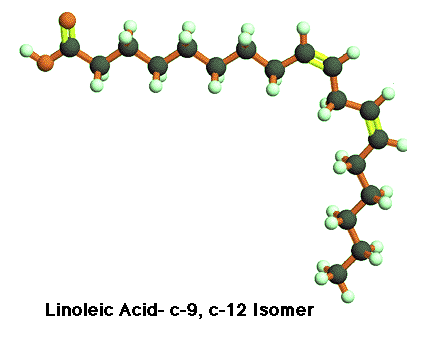
The more double bonds (carbon-carbon, C-C) a molecule has,
the more curved it is. This shape
prevents molecules from being tightly packed, and this contributes to their
fluidity, flexibility and mutability.
For example, they will have a lower melting point (Wiki).
Unsaturated fats are in constant motion; the double-bond
makes the molecule vibrate (Kane, nd, p. 10).
The closer the final double-bond is to the end, as it is in the Omega-3
fatty acids, the more the molecule vibrates (Kane, nd, p. 13). The DHA molecule has been shown to take over
100 alternate configurations; it is constantly changing (Bradbury, 2011, pp.
536-7).
CARS microscopy uses photons to measure vibrational
signatures of molecules (Wiki). CARS
microscopy of a glycerol tripalmitate crystal “composed of saturated fatty
acids typically found in mammalian lipids” showed one vibrational frequency of
its CH2 methylene group but no vibration of its C-C carbon double bond. However, this crystal was surrounded by
Omega-3 oil extracted from fish, and the Omega-3 showed
“a resonant signal not only at the
general lipid vibration but also at the C-C vibration because of the presence
of PUFAs [polyunsaturated fatty acids].
This allows visual separation of lipids at a microscopic level with
respect to their degree of saturation, and possibly also dynamic changes
thereof” (Salzer, 2012, 10.8.2, pp. 321-2, see the image in the link in the
bibliographic entry for Salzer).
This shows that there is a difference between the vibration
of saturated fat and Omega-3, with Omega-3 having vibration at more than one
location on the molecule.
Crawford et al. on quantum
effects in DHA
Psychiatrist and mental health researcher Michael A.
Crawford, M.D. and colleagues have proposed that DHA has had a paradigm-shifting
role in evolution. This will be
discussed below in the section on morphic fields. They have also proposed that this is due to
the fact that the molecular structure of DHA is uniquely qualified to promote
quantum effects.
Pi electron bonds are bonds between two adjacent atoms with
a particular shape of electron orbit (chem.ucla.edu). The unique structure of DHA, with its double
bond so near the end and its greater vibration, could make the pi electron
bonds in the double bonds behave in a way that makes quantum coherence
possible. The authors propose that this
would be comparable to Hameroff and Penrose’s theory of quantum coherence in
microtubules (which will be discussed below in the section on Hameroff) or gap
junctions (connections between the cytoplasm of two cells) (Crawford et al.,
2013, p. 3).
Electron tunneling occurs when an electron is acting like a
wave or probability cloud and can tunnel through a barrier or across a
gap. According to Crawford and
colleagues, the unique molecular structure of DHA makes coherent communication
probable along the length of the molecule and between adjacent molecules,
possibly via electron tunneling (Crawford et al.2008, p. 65, 67-8; Crawford et
al., 2013, p. 4).
Omega-3 facilitates quantum
coherence and entanglement
So, the hypothesis is that –
1) psi is facilitated by quantum coherence and entanglement;
2) quantum coherence and entanglement have been shown in
single-celled organisms, where it was facilitated by incoherent, natural light,
and molecular vibration; and
3) Omega-3 increases molecular vibration in the cell
membrane (which, by the way, Lipton says is constantly deriving signals from
the environment), so
4) greater molecular vibration caused by Omega-3 in the cell
membrane and / or the structure of DHA may increase opportunities for quantum
coherence and entanglement with the environment, which increases psi.
Radin predicted these quantum effects in living systems, and
research as borne him out. He has also
predicted that this quantum bio-physics will turn out to be the basis of the
psychological experience of psi (Radin, 2005, pp. 14, 16;
deanradin.blogspot.com/2010/02). Radin
tends to write in terms of neurons and the brain, and Omega-3 is a major
component of the brain. But, as mentioned
above, Lipton and Pert consider the mind to be received by or to reside in all
the cells of the body.
Whether we look at the effects of Omega-3 on neurons or
other cells, on the cell membrane, or other parts of the cell, the main idea of
this hypothesis is that Omega-3 increases flexibility and vibration, which
makes the system more available for quantum coherence and entanglement, which
facilitates psi.
As we saw above, a certain amount of vibration and signal
noise may facilitate quantum effects in photosynthesis in algae and
bacteria. It may be that Omega-3
molecules foster a kind of Goldilocks Zone where there is just the right amount
of flexibility, vibration, and noise in the system.
This jibes with psychologist William Braud, Ph.D.’s theory
that lability, the ready capacity for change, “the ease with which a system can
move from one state to another, the amount of ‘free variability’ in the system”
increases the capacity for psi effects (Braud in Sheldrake, 2003, p. 272).
In regard to the noise, there is also a construct called
stochastic resonance which may be relevant.
A weak signal can be boosted by adding white noise, which contains in
its mix frequencies that can resonate with the original weak signal and amplify
it (Wiki). This shows again how a
certain amount of “noise” can be enlisted to facilitate signal, or, in our
case, entanglement.
IV. ================= Microtubules: Stuart Hameroff
Stuart Hameroff on
microtubules
There is another theory about how quantum effects and consciousness
happen in cells, which may explain how Omega-3 could facilitate psi. It is anesthesiologist and consciousness
researcher Stuart Hameroff, M.D.’s theory about microtubules. Hameroff focused on the microtubules in
neurons, but let us just keep in mind, a la Lipton and Pert, that microtubules
exist in all the cells of the body, and may be implicated in consciousness
received by or residing in the whole body.
Microtubules are tubes that form the cytoskeleton or
scaffolding of every cell, and they serve many functions (Wiki). Hameroff got interested in the possible link
between microtubules and consciousness early in his career when he learned that
“anesthetics caused microtubules to disassemble” (Hameroff, nd,
quantumconsciousness.org).
Building on the work of Roger Penrose, Hameroff proposes
that microtubules have the right conditions to permit quantum entanglement of
electrons within them. He proposes that
entangled electrons in the microtubules of one neuron could link with entangled
electrons in the microtubules of other neurons, connecting large areas of the
brain (Wiki).
He theorizes that this quantum coherence is the substrate of
consciousness, that there is a proto-consciousness that is a fundamental
property of reality which we can access and which can influence us. Furthermore, “[u]nder normal circumstances
consciousness occurs in the fundamental level of spacetime geometry confined in
the brain. But when the metabolism driving quantum coherence (in microtubules)
is lost, the quantum information leaks out to the spacetime geometry in the
universe at large” (Hameroff in Taylor, 2005). This makes psi phenomena like NDEs,OBEs, and
continued consciousness after death possible.
Omega-3 and microtubules
How does Omega-3 come in to this? Omega-3 has many mechanisms of action and
there are at least two ways it may contribute to the quantum coherence in
microtubules that leads to consciousness and psi.
For one thing, Omega-3 increases doublecortin, which is a
microtubule-associated protein associated with neurogenesis. Omega-3 supplementation increased hippocampal
doublecortin in old rats suggesting a positive effect on neurogenesis (Dyall et
al., 2010; Dyall, 2011). Doublecortin
stabilizes microtubules, binds them to the cytoskeleton, and causes bundling
(Wiki). Doublecortin makes sure
microtubles have the optimum 13 protofilaments, instead of too few or too many
(Bechstedt & Brouhard, 2012; Wiki).
So, it’s possible that Omega-3, via Doublecortin or other
means, improves microtubule functioning in such as way as to facilitate quantum
coherence, consciousness, and psi.
Another possible mechanism by which Omega-3 might influence
microtubule functioning has to do with the presence of fatty acids and lipids
in the cytoplasm (Wiki). According to
Hameroff and Penrose, the cytoplasm around the microtubules may alternate
between a type of gel and the normal liquid.
When it is in the gel form, it may shield the microtubules from
environmental noise and permit quantum effects.
Hameroff and his collaborators believe this gel state occurs when the
protein actin polymerizes or forms chains (Hagan, Hameroff & Tuszynski,
2002).
There are many different derivatives of fatty acids that
that are present in the cytoplasm and that might stimulate actin polymerization. Low-density lipoproteins (LDL), which carry
forms of fatty acids and phospholipids, stimulate actin polymerization (Miller
et al., 2003). Lysophosphatidic acid, a
phospholipid derivative, stimulates actin polymerization (Fukushima et al.,
2002). A short-chain fatty acid was
shown to trigger actin polymerization (Karlsson et al., 2012). So, it’s possible that Omega-3 may be a
precursor to molecules that stimulate actin polymerization, thus facilitating
quantum effects in microtubules.
And, according to Hameroff, something that facilitates
quantum effects in microtubules, would therefore facilitate consciousness and
psi.
V. ================= Morphic
fields: Rupert Sheldrake
We’re going to look at just one more way that Omega-3 might
facilitate psi. This model will utilize
Rupert Sheldrake, Ph.D.’s theory of morphic fields and propose that consuming a
molecule that is produced by a very ancient life form that is at the base of the
evolutionary ladder and the food chain connects us better with all the morphic
fields of life on this planet and the morphic field of the planet itself.
The natural history of algae
Although fish are the primary source of the two forms of
Omega-3 that are most useful for us, EPA and DHA are not actually produced by
fish, but rather by marine or freshwater microalgae that the fish eat either
directly or indirectly through the food chain.
There are over 320,000 species of algae ranging from
unicellular organisms to giant kelps.
They are autotrophic or self-feeding, creating organic compounds from
simple inputs like sun and carbon dioxide (Wiki). They live in every ecosystem and account for
over half of the primary production at the base of food chains (Harwood & Guschina,
2009). Several carbohydrate compounds
derived from algae are commonly used in processed foods, so 70% of items in the
average American family’s shopping cart contain algae ingredients (Edwards,
2010).
Algae are eukaryotes, meaning they have a cell nucleus,
membrane-bound organelles, mitochondria, and microtubules. Eukaryotes are the second oldest life form on
the planet, with a fossil record going back 2.1 billion years. Only the prokaryotes have been around longer. Prokaryotes are mostly single-celled
organisms, whose nucleus has no membrane, such as bacteria, and they go back
over four billion years (diffen.com; boundless.com)
No prokaryotes produce Omega-3
(google.com/patents/WO1989000606A1?cl=en).
Land plants, some of which produce the less useful Omega-3 fatty acid ALA, have been around
for about 475 million years (Wiki).

“Microalgae contain lipids and fatty acids as membrane
components, storage products, metabolites and sources of energy” (FAO,
1997). Algae cytoplasm and cell
membranes have to be fluid at cold temperatures, so their lipids are very
fluid. Omega-3 contributes to making
lipids more buoyant in algae, and making low-density lipoprotein (LDL) more
buoyant and less atherogenic in us (Edwards, 2010; von Schacky, 2006;Wiki).
Several strains of algae are composed of up to 70% to 85%
lipids (fatty acids and their derivatives) (FAO, 1997; Ratledge, 2004). Botryococcus braunii is 86% lipids, Chlorella
ellipsoidea is 84% lipids (Edwards, 2010).
Under certain conditions, Botryococcus reaches 90% lipids (FAO, 1997).
Why does algae produce
Omega-3?
Two words: stress and
growth. Algae produce Omega-3 in order
to promote adaptation and survival in changing conditions. Omega-3 production can even be enhanced to
extraordinary proportions by stressing algae with unfavorable conditions. Omega-3 accumulation is also linked to certain
stages of growth, such as cell division, or in some strains, the early stages
of growth (Adarme-Vegal et al., 2012; FAO, 1997).
According to a very useful and fascinating paper by
Adarme-Vegal et al. (2012) on algal production of Omega-3 --
“Microalgae produce a variety of
compounds to help in the adaptation and survival of different environmental
conditions. Many marine microalgal strains have oil contents of between 10–50%,
(w/w) and produce a high percentage of total lipids (up to 30–70% of dry
weight) [1]. The accumulation of fatty acids is closely linked to microalgal
growth stages, functioning as an energy stockpile during unfavourable
conditions or cell division. Omega-3 is accumulated due to its high energy
content, as well as the good flow properties crucial for cellular functions.
[73,74]”
“An increase in microalgal lipid
content can be induced by a sudden change of growth conditions. The
accumulation of starch and/or lipids reserves is considered a survival
mechanism in response to growth-limiting stresses [17], such as UV radiation
[79], temperature [80] and shock or nutrient deprivation [81,82], as long as
light conditions are present that still allow efficient photosynthesis.”
“Omega-3 fatty acid biosynthesis
can be stimulated by a number of environmental stresses, such as low
temperature, change of salinity or UV radiation….. An increase in PUFAs is
expected as these fatty acids have good flow properties and would be
predominately used in the cell membrane to maintain fluidity during low
temperatures….Some of the increased PUFAs are used to repair membrane damage
but as PUFAs contain many double bonds, these also act as an antioxidant by
scavenging free radicals” (Adarme-Vegal et al., 2012).
Human brains also produce Omega-3 during growth and stress
Omega-3 serves many different functions throughout the human
body, and has many different mechanisms of action, but it is kind of amazing to
note that, like algae, human brains also produce Omega-3 during growth and
stress.
During the restoration of blood flow after a blockage in rat
brains and in oxidative stress-challenged human retinal cells, endogenous DHA
is promptly released and converted into neuroprotectin D1 which serves many
neuroprotective functions, including regeneration and preservation of
neurons. “During any threat to cell or
local tissue homeostasis” Omega-6 and Omega-3 are released for needed
pro-inflammatory and anti-inflammatory effects (Bradbury, 2011, 537-8). People tested within 48 hours of a traumatic
brain injury showed a significant increase in various fatty acids, including
DHA (an Omega-3), in the cerebral spinal fluid, compared to controls (Pilitis
et al., 2003).
In other words, there is an endogenous, automatic
self-protective mechanism that involves Omega-3 which is triggered by the onset
of brain injury (Bazan, 2005; Bazan et al., 2005; Bazan, 2006; Bazan et al.,
2011).
In terms of growth, the Omega-3 DHA is both produced and
utilized at significantly higher levels during the periods of greatest brain or
vision development. During the third
trimester, when neural growth is greatest, the blood and brain of the human
fetus show a significant increase in arachidonic acid (an Omega-6) and
DHA. A total of 600 g of fatty acids is
transferred from mother to fetus during full-term gestation. (Uauy &
Dangour, 2006, p. S26)
In general, neonate development correlates significantly
with DHA consumption (Uauy & Dangour, 2006, pp. S24-28). However, DHA supplementation led to better
visual evoked potential acuity than controls *only* during periods of rapid
changes in development of acuity – the first 20 weeks and after 35 weeks -- not
during the plateau period around 6 months (Uauy & Dangour, 2006, p. S27).
Perhaps most interesting, there is an enzyme present in
neonates that rapidly declines with age, that facilitates conversion of ALA (the simplest
Omega-3) to DHA (the most important Omega-3 for many brain functions). Animal studies suggest that this enzyme is at
its peak in the brain during the period of most rapid brain growth, that is 4-5
days after birth (Bradbury, 2011, p. 534; Cook, 1991).
The natural history of Omega-3
(especially DHA)
It turns out that it is not a coincidence that the DHA
molecule serves similar purposes in algae and human brains. This molecule has been around for a long
time, and has been highly conserved by evolution. That is, it maintained the same form and
functions in many different species.
Psychiatrist and mental health researcher Michael A.
Crawford, MD and colleagues have a very interesting theory. About 542 million years ago, there was an
evolutionary uptick that produced a large number of species. This is called the Cambrian explosion and
there are a number of theories about why it happened (Wiki).
The first photosynthesis occurred in prokaryotes (eg
bacteria) about 3.5 billion years ago.
This required existing oxygen from carbon dioxide and water, but it
produced the first free oxygen -- O2 -- in the atmosphere. Free atmospheric oxygen has increased slowly
over time, but there have been bursts of increased oxygenation, one of which
may have occurred at the time of the Cambrian explosion (Blankenship, 2010;
Wiki).
Some theorists propose that the increased availability of
oxygen made more complex biology possible, allowing structural design elements
such as collagen (protein) or exoskeletons that gave creatures better defenses
and larger size (Wiki). Crawford et al.
have theorized that the greater availability of oxygen permitted the more
abundant production of long-chain Omega-3 fatty acids that use a lot of oxygen,
especially DHA (Crawford & Broadhurst, 2012; Crawford et al., 2013, p. 2).
They believe that it was DHA that made cell membrane
structure capable of sustaining greater intracellular complexity, and thus cell
specialization, and thus, new, more complex species. In other words, lipids “played a major, as
yet unrecognised, role as determinants in evolution.” They emphasize how conserved this molecule
is, and hypothesize that it has had a great role in evolution, by pointing to
--
“…the remarkable conservation of DHA in signaling systems
over 600–500 million years. That is despite wide ranging changes in the genetic
code and the great evolutionary changes, DHA has been rigorously conserved. It
is as though DHA has been instructing the genes to do its bidding rather than
the conventional view which is the other way round” (Crawford et al., 2008,
p.71).
Furthermore, they propose that the brain first evolved from
the rich source of DHA in the marine food web during the time of the Cambrian
explosion (Crawford et al., 2008, p. 58).
DHA “provided the core for the
development of the photoreceptor, and
conversion of photons into electricity stimulated the
evolution of the nervous system and brain” (Crawford et al. 2013). “DHA was the
only molecule so selectively used over 600 million years of evolution in the
photoreceptor and synaptic junction: locations where there is the most intense
oxygen utilization, a threat to such a highly, unsaturated molecule” (Crawford
et al., 2008, pp. 68-9)
Then, about 50 million years ago there was another turning
point in human evolution, with the addition of seafood to the diet. Bone assays show that around that time there
is a statistically significant rise in the the consumption of freshwater or
marine protein between Neanderthals and early modern humans. Proto-humans evolved around water, and their
increased consumption of DHA coincides with the rapid expansion of the cerebral
cortex, and richer, more creative cultural artifacts (Bradbury, 2011, p. 530;
Crawford & Broadhurst, 2012).
We are still dependent on the marine food web. Humans produce DHA very inefficiently, yet it
composes a huge portion of our brains and we have very large brains
proportionate to our size for land mammals. Therefore we are extremely dependent
on “preformed” DHA from our food (Crawford et al., 2013, p. 2). Crawford et al. point to the correlation
between the declining consumption of Omega-3 and the increasing incidence of
non-communicable diseases, especially brain disorders, and warn that DHA
continues to play a crucial role in our continuing evolution (Crawford &
Broadhurst, 2012).
Rupert Sheldrake on morphic
fields
So, we’ve established the fundamental importance of algae
and Omega-3, particularly DHA, to our evolution and continued existence. We’ve shown how intimately connected we are
with these organisms and molecules. Now,
let us finish by examining how biologist Rupert Sheldrake’s theory of morphic
fields might take this intimate connection and show how it could facilitate
psi.
Sheldrake’s theory of morphic resonance proposes that
everything in the world comes into its form due to the influence of a field
that has been created by its predecessors.
This applies to atoms, cells, organs, plants, animals, human cultures,
crystals – anything formed in the world.
“Morphic fields are shaped by morphic resonance from all
similar past systems, and thus contain a cumulative collective memory. Morphic resonance depends on similarity and
is not attenuated by distance in space and time. Morphic fields are local,
within and around the systems they organise, but morphic resonance is
non-local” (Sheldrake, 2012, p. 100).
This theory is rooted in the work of early 20th century
biologists who came before Sheldrake, but he added the idea that “the structure
of these fields is not determined by either transcendent Ideas or timeless
mathematical formulae, but rather results from the actual forms of previous
similar organisms” (Sheldrake, 1988, p. 108).
For example, every growing crystal of copper sulfate resonates with
previous crystals of copper sulfate.
Every oak sapling is shaped by the collective field created by previous
oaks (Sheldrake, 2012, p. 99).
The morphic resonance theory also supplements the gene
theory in crucial ways. Genes, alone,
cannot predict how an embryo will develop, nor can they predict what form a
protein will take (Sheldrake, 2012, pp. 142-5).
Also, genes, alone, cannot account for evolution. There are unexplained gaps and leaps in the
evolutionary record. According to
Sheldrake, the morphic fields of species evolve, as well as their genes
(Sheldrake, 1999, p. 316). Many
theorists have observed an apparent self-organizing capability in nature (Wiki
– self-organization). Perhaps the
Cambrian explosion was due, in part, to the emergence of a new set of morphic
fields.
How morphic resonance makes psi possible
Sheldrake’s theory makes psi possible by noticing that
systems in general are drawn to goals, and human experience in particular is
driven by where we put our attention and intention, even if that is beyond the
reach of our senses. Morphic fields
“work by imposing patterns or structures on otherwise random or indeterminate
processes in the systems under their control.
Second, they contain attractors, which draw systems under their
influence toward future goals” (Sheldrake, 2003, p.278).
Morphic fields --
“….include the behavioral fields
that underlie the behavior and instincts of animals….These fields interact with
nervous systems and brains by imposing pattern and order on otherwise
indeterminate or chaotic processes within them…
Morphic fields also underlie our
perceptions, thoughts, and other mental processes. The morphic fields of mental activities are
called mental fields. Through mental
fields, the extended mind reaches out into the environment through attention
and intention, and connects with other members of social groups. These fields help explain telepathy, the
sense of being stared at, clairvoyance, and psychokinesis. They may also help in the understanding of
premonitions and precognitions through intentions projecting into the future”
(Sheldrake, 2003, p. 279).
Omega-3, the human brain,
evolution, morphic resonance, and psi
So, the hypothesis is that –
-- algae and Omega-3 are ancient organic forms on this
planet,
-- and they are intrinsic and foundational to so much on the
planet. Even petroleum and natural gas
originate “from algae in ancient oceans” (FAO, 1997)!
-- We humans must have preformed Omega-3 DHA to be fully who
we’re supposed to be. We become
vulnerable to disease and emotional and cognitive impairment without it. We still need to consume algae / Omega-3 now.
-- The human brain is composed of and run by Omega-3. The organ that makes us most human, and is
most central to our evolution is based on Omega-3 (Crawford & Broadhurst,
2012).
-- Algae and Omega-3 molecules have morphic fields. Sheldrake presumes that microorganisms and
molecules have morphic fields (Sheldrake, 1999, p. 308; Sheldrake, 2003, p.
278).
-- There are nested morphic fields – a morphic field for
your neurons, brain, family, culture, species, kingdom, organic life, the
planet. Not only does ontogeny or
morphogenesis recapitulate phylogeny, but the ongoing functioning of our bodies
from the molecular level up recapitulates, to some extent, the mechanisms of
our evolutionary relatives. (Cf. the
Granick hypothesis which states that the way photosynthesis works now
recapitulates the evolution of photosynthesis.
This theory probably doesn’t capture everything, but has merit and is
fascinating (Blankenship, 2010; flipper.diff.org).)
-- Morphic fields serve evolution; they are adaptive
(Sheldrake, 1988/1995, p. 283; Sheldrake, 1999, p. 316).
-- The morphic field of the human brain / mind allows for
psi through intention and attention (Sheldrake, 1999, p. 316; Sheldrake, 2003,
p. 279). Psi is adaptive; it facilitates
pursuing our goals.
-- Consuming algae / Omega-3 brings our brains to full
functioning. This may work at both the
physical molecular level and at the level of morphic resonance. This connects us physically and through
morphic resonance to an ancient, foundational organism and molecule that are
pervasive on our planet, and that we are highly dependent on, and which are part of many morphic fields. This may make more of the morphic fields of
this planet more accessible.
-- There are morphic fields that are bad for us (radioactive
elements, fascism) and morphic fields that are good for us (forests,
Omega-3). Being exposed to healthful
morphic fields is adaptive and should increase psi because psi is adaptive.
--Among many other functions, Omega-3 is produced by algae
and humans in order to adapt to stress and to grow. This underscores the resonance between algae
and us. Stress and growth are conditions
that call upon intention and attention even more strongly. Per Sheldrake, intention and attention
undergird psi through morphic resonance.
Directions for further
exploration
There are so many more potential links between Omega-3 and
psi, but this essay is getting unwieldy, so let us just mention some of the
possibilities for further inquiry:
Photon emission. Explore the possible connections among
Michael Persinger’s work on photon emission from the brain, the cell membrane
in particular, bioluminescence in living organisms, including krill and
dinoflagellates, both of which produce Omega-3 (Hu & Wu, 2011; Lonetree
& Miller, 2011-13; Viva Labs, nd; Volk, 2012;).
Psychedelics. Compare the effects of high-dose Omega-3 to
psychedelics and other mind-altering substances that people use to facilitate
psi. Could this be a slower-acting, but
ultimately healthier, more sustainable, more integrated path to psi?
Nationality. Can we link national fish consumption with
national psychicness? According to FAO
statistics for 1995, of 38 countries, Iceland, Japan, Malaysia, Norway, and
Finland had the highest fish consumption, in that order, with Iceland being the
highest (Hibbeln et al., 2006). However,
cross-national surveys on psychic experience yield mixed results (Haraldsson,
E., 1985; Haraldsson, 2011).
The eminent Icelandic psychic researcher Erlendur
Haraldsson, Ph.D. points out that Italy and the US actually score higher in an
international survey of psychic experience in Europe and the US, with Iceland
third. So, it might be possible to say
that Iceland
is *among* the most psychic nations (Haraldsson, personal communication, 11
July 2013).
Unfortunately, the Inuits’ traditional diet, which was off
the charts for Omega-3 consumption, is no more.
There may be too many variables at the national level for
Omega-3 consumption via fish to unequivocally predict psychic experience, but
it would be nice to look into it further.
Field effects and frequencies.
In this essay, we’ve looked briefly at brainwaves and morphic fields. What other field effects and frequencies
might the Omega-3 molecules, algae, and the human brain (and heart and enteric
brain) have and how might they interrelate?
Does Omega-3 facilitate synchronization of brainwaves globally or
between particular areas of the brain?
According to the Cemi field theory of biologist Johnjoe
McFadden, Ph.D. and neurophysiologist Susan Pockett, Ph.D., neuronal activity
both causes an EM field and is affected by that EM field and others. The more synchronous the firing of neurons,
the bigger the influence of the EM field.
They propose that the EM field is the seat of consciousness
(machineslikeus.com, 2011; Wiki). What
effect does Omega-3 have on this EM field?
The discussion of Omega-3’s psi-facilitative effects
definitely must be extended to include the heart. The heart generates the largest
electromagnetic field of the body, and can be measured several feet away. Its electrical field is 60 times greater in
amplitude and 5000 times greater in strength than the brain’s electrical field
(Holle, 2012; Heartmath, 2012). And
perhaps the mostly widely accepted and researched aspect of Omega-3 is how it
benefits the cardiovascular system. For
example, a meta-analysis of 15 studies showed that Omega-3 supplementation may
favorably influence the variability of frequency in heart beat and enhance
vagal tone (which calms the heart) (Xin et al., 2013). How might Omega-3 facilitate psi via its
effects on the heart?
It also would be interesting to explore the implications of
the fact that specific sound or light frequencies will either kill specific
strains of algae or promote their growth, thus determining Omega-3 production (Hutchinson, nd.; Park
& Lee, 2000; sofchem.fr). What might
this reveal about the frequencies that impact Omega-3 molecules in the brain
and how that impacts psi? We know cell
phones, power stations, geomagnetism, God helmets, and the acoustics of ancient
temples affect the brain and / or psi.
Reality shift. It may be that changing your brain literally
changes external reality around you, not just your experience of or
relationship to reality. This may work
via some sort of field effect or through morphic resonance or the holographic
nature of the mind / brain and universe.
Therefore, changing the brain with Omega-3 supplementation might change
reality around you.
Teilhard de Chardin. Synchronistically, the philosopher, priest,
and polymath Teilhard de Chardin coined the term “the Omega point…to describe a
maximum level of complexity and consciousness towards which he believed the
universe was evolving” (Wiki). His
concept has some interesting features in common with the role of the Omega-3
molecules. Both undergird evolution; permit
great organismic complexity; and unite creation (Wiki). It might be fruitful to explore the
synchronicity further.
EEG omega complexity. In another synchronicity, “omega” is the term
used for brain electrical complexity or spatial de-synchronizaton or
dissimilarity (Dauwels et al., 2010).
When an EEG shows that signals in an area of the brain are the same, the
omega complexity is low. When an EEG
shows that signals in an area of the brain are dissimilar, the omega complexity
is high.
For example, one study showed that omega complexity in
healthy subjects is higher in the right hemisphere waking and lower when asleep
(Szelenberger et al., 1996). Another
study showed that women who had strong belief in the paranormal had more
hemispheric symmetry of omega complexity during an eyes-closed period than
non-believers (Pizzagalli et al., 2000).
It’s not necessarily the case that high synchronization is
good and high complexity is bad. For
example, one study found lower omega complexity globally and in the right
hemisphere in people with sleep apnea, which the researchers attributed to
chronic hypoxia (Toth et al., 2009).
Surprisingly, one study looked at practitioners of five
different meditation traditions -- Tibetan Buddhist, Qigong, Shaja Yoga, Ananda
Marga Yoga, and Zen. In all five
traditions, omega complexity was higher during meditation than during task free
resting. This means that meditation led
to a brain functional state that was characterized by an increase of
independent brain processes (Faber et al., 2011).
It would be interesting to explore whether there is any
correlation between Omega-3 consumption and increased or decreased omega
complexity globally or in particular brain areas, and also to look at
particular brainwave frequencies.
Health challenges of mediums. Historically, some psychics and mediums have
had a lot of physical health problems or weight gain. Might their psi faculties be depleting or
stressing their physical systems, causing endocrine or metabolic imbalance, and
might supplementation with Omega-3 mitigate these adverse consequences of psi?
Kundalini. Kundalini awakenings range from the fairly
easy to the extremely difficult. Rapid
neurological re-wiring may be part of what transpires in a Kundalini awakening. Kundalini is a natural evolutionary potential
that is supposed to be self-directing and self-healing. In the last few decades, the extremely skewed
dietary Omega-6:Omega-3 ratio worldwide is contributing to the global burden of
disease. The skewed ratio also may be
making it harder for Kundalini to be as self-healing as it was historically. Might supplementation with Omega-3 mitigate
the adverse consequences of this dietary imbalance and restore the body’s
innate ability to integrate Kundalini?
Neurological injury & psi
opening. Finally, there is
substantial anecdotal evidence linking neurological injury and psychic
opening. The brain automatically
produces fatty acids, including the Omega-3 DHA, after stroke or head
injury. Is this endogenous production of
Omega-3 part of the link between brain damage and psychic opening? Neurological injury does not always lead to
greater psi, and is clearly sometimes too disabling. Might Omega-3 supplementation move the
neurological damage / change from the chaos zone to the Goldilocks Zone,
permitting not only rehabilitation of conventional faculties but expansion of
psi faculties?
Ancient peoples around the world recognized the link between
Omega-3-rich fish and physical health, mental health, happiness, prosperity,
fertility, and luck. They also linked
fish with mystical, occult, or esoteric knowledge or abilities. In the ancient teaching stories, fish often
represent the transformation of matter into spirit.
Many traditions would say that fish and algae and the
Omega-3 molecules each have a spirit which we can call upon to help us in our
healing and growth. Omega-3 is an
“ancient nutrient,” (Bradbury, 2011, p. 546) which both takes us back to our
foundation and makes possible our evolution.
It makes us more whole, more who we are supposed to be, and it does this
by converting our very cells from ice-like rigidity to water- or even
steam-like fluidity and interpermeability with the Universe.
My personal experience with
Omega-3 and psi
I have updosed on Omega-3 four times. The first time, around late 2005 or early
2006, I went from zero to 1800 mg EPA / DHA in order to address neurological
damage from a prescription medication. I
don’t remember what effect this had on me.
The fourth, most recent time, is too recent to say what the effect is.
The second time was from September 2009 to January 2010,
when I slowly updosed from 1800 mg to 4,600 mg.
I saw a huge increase in synchronicities, and a smaller increase in
precognitions, and the two most impressive clairvoyant dreams I’ve ever had – one
informing me that a healer I had previously consulted had died, which turned
out to have just happened three weeks prior, and one referring me to a specific
article with author and topic which, as far as I know, was not
cryptomnesia. Although I was still very
sick with neurological damage, I started having sporadic experiences of Flow,
of things falling into place very easily and magically.
The third time was from November 2012 to February 2013, when
I slowly updosed from 4,600 mg to 9,000 mg.
I had a stunning increase in psi – jaw-dropping synchronicities,
precognitive dreams, and my first experiences of guidance in the form of short
phrases said in a kind of neutral voice in my head (my own voice but not my own
thought) and giving me ideas that were really unfamiliar to me.
It’s also worth mentioning that during my extremely
challenging taper off the toxic medication in 2004 and half of 2005, I often
awoke in Fish Pose or Matsyasana which is supposed to have many health benefits
that overlap with those of fish oil.
Of course, I am “an N of 1” and there are significant
confounds. I am starting with a brain
damaged by a prescription medication, and there is ample anecdotal evidence
that neurological damage can initiate a psi opening. But, my hypothesis is that neurological
damage sometimes creates a psi opening that is too chaotic to use, and that
some kind of help is needed to channel or organize the psi impressions.
Caveat Vorator
I am concerned about how people might use this
information. Note that this is highly
speculative, and I do not actually have much experience yet with high dose
Omega-3. In other words, I don’t know
what I’m talking about! :)
Omega-3 is a pretty safe substance, but it is not safe for
every kind of health problem. Please do
lots of your own research and consult with people you respect before you decide
to try it. I especially recommend the
information on this website –
Note that Omega-3 is not the same thing as fish oil. Fish oil contains Omega-3. For some reason, fish oil bottles list the mg
of fish oil, which is a useless number.
Ignore that. The amount of
Omega-3 in a fish oil capsule is the sum of the EPA and DHA. And, you have to check what “suggested serving”
that’s for – 1, 2 or 3 pills -- to determine how much is in one pill.
If you are going to try it, it is probably smartest to take
one capsule of about 500 mg EPA + DHA, and wait two weeks to see how you react
to it. If all goes well, stay at that sane
pace, and go up by one capsule every two weeks, always assessing the impact on
you. Be sensible and take good care of
yourself.
If you or anyone you know has taken high-dose Omega-3 (9,000
mg / day EPA + DHA or more), please contact me.
=================
Sources:
Aardema, F.
(2006). Focus 10 - Mind Awake
Body Asleep. http://www.monroeinstitute.org/research/focus-10-mind-awake-body-asleep
Adarme-Vega1, T.C., Lim, D.K.Y., Timmins, M., Vernen, F., Li, Y., &
Schenk, P.M. (2012). Microalgal biofactories: a promising approach
towards sustainable omega-3 fatty acid production. Microbial Cell Factories, 11: 96. http://www.microbialcellfactories.com/content/11/1/96#B15
Atwater,
F.H. (1993). From a Dissociative to a Transcendent State: An
EEG Definition of the Hemi-Sync® Process.
http://www.monroeinstitute.org/research/cat/eeg/from-a-dissociative-to-a-transcendent-state-an-eeg-definition-of-the-hemi-s
Bechstedt, S. & Brouhard, G.J. (2012).
Doublecortin recognizes the 13-protofilament microtubule cooperatively
and tracks microtubule ends.
Developmental Cell, 23: 181-92.
Bengston, B. & Fraser, S. (2010).
The energy cure: Unraveling the
mustery of Hands-on healing. Boulder: Sounds True, Inc.
Blankenship, R.E.
(2010). Early evolution of
photosynthesis. Plant Physiology,
154: 434-8. http://www.plantphysiol.org/content/154/2/434.full
Bradbury, J.
(2011). Docosahexaenoic Acid
(DHA): An ancient nutrient for the
modern human brain. Nutrients, 3: 529-54.
http://www.mdpi.com/2072-6643/3/5/529/pdf
Chin, A.W., Prior, J., Rosenbach, R., Caycedo-Soler, F.,
Huelga, S.F., & Plenio, M.B.
(2013). The role of
non-equilibrium vibrational structures in electronic coherence and recoherence
in pigment–protein complexes. Nature
Physics, 9: 113-118. http://www.nature.com/nphys/journal/v9/n2/abs/nphys2515.html
Chytrova G, Ying Z, & Gomez-Pinilla F. (2010).
Exercise contributes to the effects of DHA dietary supplementation by
acting on membrane-related synaptic systems.
Brain research, 1342: 32-40. http://www.ncbi.nlm.nih.gov/pubmed/19446534
Cofield, C.
(2013). Proteins boost quantum
coherence in bacteria. http://physicsworld.com/cws/article/news/2013/jan/11/proteins-boost-quantum-coherence-in-bacteria
Collini, E., Wong, C., Wilk, K.E., Curmi, P.M.G., Brumer,
P., & Scholes, G.D. (2010). Coherently wired light-harvesting in
photosynthetic marine algae at ambient temperature.
Nature, 463: 644-647.
http://www.nature.com/nature/journal/v463/n7281/abs/nature08811.html
Cook, H.W.
(1991). Brain metabolism of
alpha-linolenic acid during development.
Nutrition, 7: 440-2. http://www.ncbi.nlm.nih.gov/pubmed/1686982
Crawford, M.A., Broadhurst, C.L., Galli, C., Ghebremeskel,
K., Holmsen, H., Saugstad, L.F., Schmidt, W.F., Sinclair, A.J., & Cunnane, S.C. (2008).
The Role of Docosahexaenoic and Arachidonic Acids as Determinants of
Evolution and Hominid Brain Development.
In Tsukamoto, K., Kawamura, T., Takeuchi, T., Beard, Jr., T.D., &
Kaiser, M.J. (Eds.) Fisheries for Global Welfare and Environment,
5th World Fisheries Congress 2008, pp. 57–76.
http://www.terrapub.co.jp/onlineproceedings/fs/wfc2008/pdf/wfcbk_057.pdf
Crawford, M.A. & Broadhurst, C.L. (2012).
The role of docosahexaenoic and the marine food web as determinants of
evolution and hominid brain development: the challenge for human sustainability. Nutritional Health, 21: 17-39.
http://www.ncbi.nlm.nih.gov/pubmed/22544773
Crawford MA, Broadhurst CL, Guest M, Nagar A, Wang Y,
Ghebremeskel K, & Schmidt WF.
(2013). A quantum theory for the
irreplaceable role of docosahexaenoic acid in neural cell signalling throughout
evolution. Prostaglandins, Leukotrienes,
and Essential Fatty Acids, 88:
5-13. http://www.ncbi.nlm.nih.gov/pubmed/23206328
Darios, F. & Davletov, B. (2006).
Omega-3 and omega-6 fatty acids stimulate cell membrane expansion by
acting on syntaxin 3. Nature, 440: 813-817.
http://www.ncbi.nlm.nih.gov/pubmed/16598260
Dorfman KE, Voronine DV, Mukamel S, & Scully MO. (2013).
Photosynthetic reaction center as a quantum heat engine. Proceedings of the National Academy
of Science, 110: 2746-51. http://www.ncbi.nlm.nih.gov/pubmed/23365138,
http://mukamel.ps.uci.edu/publications/pdfs/725.pdf
Dyall SC, Michael GJ, & Michael-Titus AT. (2010).
Omega-3 fatty acids reverse age-related decreases in nuclear receptors
and increase neurogenesis in old rats.
Journal of Neuroscience Research, 88:
2091-102.
http://www.ncbi.nlm.nih.gov/pubmed/20336774
Dyall, S.C.
(2011). The role of omega-3 fatty
acids in adult hippocampal neurogenesis.
Oléagineux, Corps Gras, Lipides. Volume 18, Number 5, 242-5. http://www.jle.com/e-docs/00/04/6E/67/article.phtml
Edwards, M.
(2010). Algae 101: Algal species selection. http://www.algaeindustrymagazine.com/algae-101-part-seven-algal-species-selection/
Engel GS, Calhoun TR, Read EL, Ahn TK, Mancal T, Cheng YC,
Blankenship RE, & Fleming GR.
(2007). Evidence for wavelike
energy transfer through quantum coherence in photosynthetic systems. Nature, 446:
782-6. http://www.ncbi.nlm.nih.gov/pubmed/17429397,
http://unifiedfieldtheories.com/QCPhotosynthesisLBL
FAO. (1997). Renewable biological systems for alternative
sustainable energy production. Ch. 6 – Oil
production. http://www.fao.org/docrep/w7241e/w7241e0h.htm
Fontani, G., Corradeschi, F., Felici, A., Alfatti, F.,
Migliorini, S. and Lodi,
L. (2005). Cognitive and physiological
effects of Omega-3 polyunsaturated fatty acid supplementation in healthy
subjects. European Journal of Clinical
Investigation, 35: 691-9. http://www.nutritionladder.com/articles/Cognitive%20and%20physiological%20effects%20of%20Omega-3%20polyunsaturated%20fatty%20acid%20supplementation%20in%20healthy%20subjects.pdf
Fukushima, N., Ishii, I., Habara, Y., Allen, C.B., & Chun, J. (2002).
Dual Regulation of Actin Rearrangement through Lysophosphatidic Acid
Receptor in Neuroblast Cell Lines: Actin Depolymerization by Ca2+-α-Actinin and
Polymerization by Rho. Molecular Biology of the Cell, 13: 2692-2705.
http://www.ncbi.nlm.nih.gov/pmc/articles/PMC117935/
Hagan, S., Hameroff, S., & Tuszynski, J. (2002).
Quantum Computation in Brain Microtubules. Physical review, 65.
Hameroff, S.
(nd). Interest in Consciousness
Research & Personal Statement. http://www.quantumconsciousness.org/interests.html
Harwood JL &Guschina
IA. (2009).
The versatility of algae and their lipid metabolism. Biochimie, 91: 679-84.
http://www.ncbi.nlm.nih.gov/pubmed/19063932
Ho, M.W. (2008). The Rainbow and the worm. Singapore: World Scientific Publishing Co., Pte.,
Ltd. http://nonlocal.com/hbar/coherence.html
Kane, E. (nd). 4:1 Oil – The right stuff. http://www.bodybio.com/BodyBio/docs/BodyBioBulletin-4to1Oil.pdf
Karlsson, T., Musse, F., Magnusson, K.E., & Vikström,
E. (2012). N-Acylhomoserine lactones are potent
neutrophil chemoattractants that act via calcium mobilization and actin
remodeling. Journal of Leukocyte
Biology, 91: 15-26. http://www.jleukbio.org/content/91/1/15.full
Kidd, P.M.
(2005). Neurodegeneration from
mitochondrial insufficiency: nutrients, stem cells, growth factors, and
prospects for brain rebuilding using integrative management. Alternative Medicine Review, 10: 268-93.
http://www.ncbi.nlm.nih.gov/pubmed/16366737
Lawrence, F.
(2006). Omega-3, junk food and
the link between violence and what we eat.
The Guardian. http://www.guardian.co.uk/politics/2006/oct/17/prisonsandprobation.ukcrime
Liaw, A. (nd). Rich fat, poor fat, and the cell
membrane. http://www.imi.com.hk/rich-fat-poor-fat-cell-membrane.html
Lipton, B.
(2005). The biology of
belief: Unleashing the power of
consciousness, matter and miracles. Santa Rosa, CA: Mountain
of Love / Elite Books.
Menon, K.
(2013). Photosynthesis: Quantum heat engine.
Miller, Y.I., Worrall, D.S., Funk, C.D., Feramisco, J.R.,
and Witztum, J.L. (2003). Actin Polymerization in Macrophages in
Response to Oxidized LDL and Apoptotic Cells: Role of 12/15-Lipoxygenase and
Phosphoinositide 3-KinaseV in Box.
Molecular Biology of the Cell, 14:
4196-4206. http://www.molbiolcell.org/content/14/10/4196.full
Omega Science Institute.
(2013). Fish oil. http://omegascience.org/product_ingredients/fish_oil.aspx
Persinger, M. A. (1984). Striking EEG profiles from single
episodes of glossolalia and transcendental meditation. Perceptual and Motor
Skills, 58, 127 – 133. http://www.ncbi.nlm.nih.gov/pubmed/6371700
Persinger MA.
(1999). Increased emergence of
alpha activity over the left but not the right temporal lobe within a dark
acoustic chamber: differential response of the left but not the right
hemisphere to transcerebral magnetic fields.
International Journal of Psychophysiology. 34:
163-9. http://www.ncbi.nlm.nih.gov/pubmed/10576400
Persinger MA, Koren SA, & Tsang EW. (2003).
Enhanced power within a specific band of theta activity in one person
while another receives circumcerebral pulsed magnetic fields: a mechanism for
cognitive influence at a distance?
Perceptual Motor Skills, 97:
877-94.
Pilitsis JG, Coplin WM, O'Regan MH, Wellwood JM, Diaz FG,
Fairfax MR, Michael DB, & Phillis JW.
(2003). Free fatty acids in
cerebrospinal fluids from patients with traumatic brain injury. Neuroscience Letters, 349: 136-8.
Radin, D.
(2006). Entangled minds: Extrasensory experiences in a quantum
reality. New York:
Simon & Schuster, Inc.
Radin, D.
(2010). Quantum biology now.
Quantum psychology next? http://deanradin.blogspot.com/2010/02/quantum-biology-now-quantum-psychology.html
Ratledge, C.
(2004). Fatty acid biosynthesis
in microorganisms being used for Single Cell Oil production. Biochimie, 86: 807-15.
http://www.ncbi.nlm.nih.gov/pubmed/15589690
Richards, M.A., Koren,
S.A., &
Persinger, M.A. (2002). Circumcerebral
application of weak complex magnetic fields with derivatives and changes in
electroencephalographic power spectra within the theta range: implications for
states of consciousness. Perceptual and Motor Skills, 95: 671-686.
http://www.ncbi.nlm.nih.gov/pubmed/12434867
Schutz, J.
(2010). The mind is a powerful
thing – part 4. http://bioenergyandcancer.blogspot.com/2010_12_01_archive.html
Sadigh, M. R.
(nd). The Effects of Hemi-Sync®
on Electrocortical Activity. http://www.monroeinstitute.org/research/the-effects-of-hemi-sync-on-electrocortical-activity
Sadigh, M.R.
(1990). Hemi-Sync® and the Brain
Entrainment Process: Myth or Reality? http://www.monroeinstitute.org/research/cat/brain-mapping/hemi-sync-and-the-brain-entrainment-process-myth-or-reality
Salzer, R.
(2012). Biomedical imaging: Principles and applications. Hoboken,
NJ: John Wiley & Sons. http://books.google.com/books?id=4lw6KOEbTMoC&pg=SA9-PA36&lpg=SA9-PA36&dq=%22omega-3%22+vibration&source=bl&ots=wZrbge2eSl&sig=BaB_I4WJCLoCC2-PiRnF5jlEdgk&hl=en&sa=X&ei=W73FUcPVMsHwiwK_14DABw&ved=0CEQQ6AEwAw#v=onepage&q=%22omega-3%22%20vibration&f=false
Sheldrake, R. (1988 /
1995). The presence of the past: Morphic resonance and the habits of
nature. Rochester, VT: Park
Street Press.
Sheldrake, R.
(1999). Dogs that know when their
owners are coming home: And other
unexplained powers of animals. New York: Three Rivers Press.
Sheldrake, R.
(2003). The sense of being stared
at: And other aspects of the extended
mind. New York:
Crown Publishers.
Taylor, G.
(2005). The quantum mind of
Stuart Hameroff.
http://dailygrail.com/Interviews/2005/1/Quantum-Mind-Stuart-Hameroff
Tremblay, L. (2011).
Do Omega 3 fatty acids play a role in myelin production? http://www.livestrong.com/article/474358-do-omega-3-fatty-acids-play-a-role-in-myelin-production/
Uauy, R. & Dangour, A.D. (2006). Nutrition in Brain Development and Aging:
Role of Essential Fatty Acids. Nutrition
Reviews, 64: S24-S33. http://www.omegapure.com/media/document/research/0510103057_nutrition-in-brain-development--ag.pdf
von Schacky, C.
(2006). A review of Omega-3 ethyl
esters for cardiovascular prevention and treatment of increased blood
triglyceride levels. vascular Health
Risk Management, 2: 251-62. http://www.ncbi.nlm.nih.gov/pmc/articles/PMC1993981/
Wendling, M., Pullerits, T., Przyjalgowski, M.A., Vulto,
S.I.E., Aartsma, T.J., van Grondelle, R., & van Amerongen, H. (2000).
Electron-vibrational coupling in the Fenna-Matthews-Olson complex of Prosthecochloris
aestuarri determined by temperature-dependent absorption and fluorescence
line-narrowing measurements. Journal of
Physical Chemistry, 104: 5825-31). http://www.nat.vu.nl/en/Images/00-06_tcm69-86217.pdf
Wise, A.
(1995/2004). The high-performance
mind. New York:
Penguin.
=======
Photon emission
Hu, H. & Wu, M.
(2011). Important photon emission
results reported by Michael Persinger’s group.
Journal of Consciousness Exploration & Research, 2: 1555-6.
Lonetree, B. & Miller, I. (2011-13).
The Sedona effect: Earth
frequency, geomagnetic & brainwave resonance. http://sedonanomalies.weebly.com/
Volk, S. (2012). Top ten developments in Fringe-ology: 1:
Could the field of psi research have found its breakthrough? http://stevevolk.com/archives/tag/michael-persinger
Viva Labs. (nd). Bioluminescence in krill and other deep sea
creatures for kids!
=======
Psychicness by national fish consumption
Hibbeln JR, Nieminen LR, Blasbalg TL, Riggs JA, & Lands
WE. (2006). Healthy intakes of n-3 and n-6 fatty acids:
estimations considering worldwide diversity.
American Journal of Clinical Nutrition, 83: 1483S-1493S.
http://ajcn.nutrition.org/content/83/6/S1483.full
http://ajcn.nutrition.org/content/83/6/S1483/T2.expansion.html
=======
Iceland
Haraldsson, E. (1985). Representative national surveys of
psychic phenomena: Iceland, Great Britain, Sweden,
USA and Gallups multinational survey. Journal of the
Society for Psychical Research, 53, 145-158.
https://notendur.hi.is/erlendur/english/NSP.pdf
Haraldsson, E.
(2011). Psychic experiences a
third of a century apart: Two
representative surveys in Iceland
with an international comparison.
Journal of the Society of Psychical Research, 75: 76-90/
McLuhan, R.
(2013). Ghosts in Iceland. http://monkeywah.typepad.com/paranormalia/2013/06/ghosts-in-iceland.html
=======
Teilhard de Chardin
=======
Omega complexity in EEG
Dauwels J, Vialatte F, Musha T, & Cichocki A. (2010).
A comparative study of synchrony measures for the early diagnosis of
Alzheimer's disease based on EEG.
Neuroimage, 49: 668-93. http://www.ncbi.nlm.nih.gov/pubmed/19573607
Faber, P.L., Lehmann, D., Milz, P., Tei, S., & Kochi, K. (2011).
Dimensionality of multichannel EEG (Omega Complexity) during meditation
in five traditions. European Psychiatry,
26: 944.
http://www.sciencedirect.com/science/article/pii/S0924933811726499
Pizzagalli D, Lehmann D, Gianotti L, Koenig T, Tanaka H,
Wackermann J, & Brugger P.
(2000). Brain electric correlates
of strong belief in paranormal phenomena: intracerebral EEG source and regional
Omega complexity analyses. Psychiatry
Research, 22: 139-54. http://www.ncbi.nlm.nih.gov/pubmed/11120441
Szelenberger W, Wackermann J, Skalski M, Drojewski J, &
Niemcewicz S. (1996). Interhemispheric differences of sleep EEG
complexity. Acta Neurobiologiae
Experimentalis (Warsaw),
56, 955-9. http://www.ncbi.nlm.nih.gov/pubmed/9033131
Toth M, Faludi B, Wackermann J, Czopf J, & Kondakor
I. (2009). Characteristic changes in brain electrical
activity due to chronic hypoxia in patients with obstructive sleep apnea
syndrome (OSAS): a combined EEG study using LORETA and omega complexity. Brain Topography, 22: 185-90.
http://www.ncbi.nlm.nih.gov/pubmed/19711180
=======
Field effects and frequencies
Heartmath.
(2012). The energetic heart is
unfolding. http://www.heartmath.org/free-services/articles-of-the-heart/energetic-heart-is-unfolding.html
Holle, K.A.
(2012). A new empirical
understanding of the heart as the seat of emotion.
Hutchinson, G.
(nd). Technical white paper on
why the Sonic Solutions ultrasonic products do not harm life forms other than
algae. South Santee Aquaculture,
Inc.
Park, K.H. & Lee, C.G.
(2000). Optimization of algal photobioreactors
using flashing lights. Biotechnology and
Bioprocess Engineering, 5: 186-90). http://www.bbe.or.kr/storage/journal/bbe/5_3/6819/articlefile/article.pdf
sofchem.fr.
(nd). Ultrasonic antifouling
technologies. http://www.sofchem.fr/antialgues_fluid_impact.htm
Xin, W, Wei, W, & Li, XY. (2013).
Short-term effects of fish-oil supplementation on heart rate variability
in humans: a meta-analysis of randomized controlled trials. American Journal of Clinical Nutrition,
97: 926-35. http://www.ncbi.nlm.nih.gov/pubmed/23515005
Is the brain's em field the source of human
consciousness? (2011). http://machineslikeus.com/news/brains-em-field-source-human-consciousness
=======

