Monday, June 25, 2012

Interview with Rosalyn Bruyere: Neurological problems and energy healing


The autobiographies of healers and time spent in a neurological damage / recovery community have given me the impression that it is harder to do effective energy healing on neurological problems than on any other kind of ailment.  I recently asked the well-established healer Rosalyn Bruyere for her thoughts on this.

For the purposes of this essay, the term “energy healing” will be used broadly to include an array of healing methods that may use electromagnetic energy, other energy, consciousness, information, or some other mechanism as yet unidentified.

Rev. Rosalyn Bruyere is the author of “Wheels of light:  Chakras, auras, and the healing energy of the body.”  This is the most systematic and precise explanation of chakras and auras I have ever read.  She is an electrical engineer, healer, clairvoyant, and ordained minister, who was trained by healers from a variety of traditions and cultures.  She has been an active healer and teacher for several decades.

In an August 2011 interview with blogger and energy healer Adele Wang, Rev. Bruyere said that many healers have difficulty with neurological problems, and that she, herself, had been on a trajectory toward ever greater skill with neurological issues:

“I think it’s really important for healers to think in terms of what you like doing, and what you are compelled to do. So, I happen to like cancer patients – I always have. I’ve always had some trouble with some neurological diseases. But, I was also trained by 80 year old people in my youth, who always said that healing didn’t do much for neurological disease. Over the years, I’ve worked more and more with neurological disease and brain disorders, and I now understand why healers didn’t traditionally do well with them. It’s because their own nervous system energy is allowed to dissipate because they don’t maintain their own coordination. And I’ve learned through a lot of physical training myself, how to maintain my high energy level, that I’m better able to treat some neurological diseases than other healers. Because I trained for it.”

Last week, Rev. Bruyere graciously agreed to a phone interview with me to further explore the challenges of energy healing for neurological problems.  Her responses have been paraphrased, with her permission.

* * * * *

What has made it possible for you to have increasing success with healing neurological problems?

First of all, Bruyere has always had an easy time working with the neuropathy caused by chemo drugs.  The difference between this neurological damage and other neurological problems is that with chemo-induced neuropathy “there is no obstruction, just dirt.”  In other words, it is a less entrenched energy pattern.  Also, there has not been time for bad adaptations to accumulate.

Bruyere said that she has discovered the value of continuously improving her own nervous system.  She lifts weights – but, particularly in a way that challenges the nervous system, rather than purely for building strength.  In other words, she emphasizes improving coordination, balance, and cross-hemisphere collaboration.  She is also taking up tap dancing for the same reasons.

She also attributes her increasing skill to some spiritual developments that were private.  I mention this for reasons of scientific method – in studying this puzzle, it is important to remember that this may be a variable in a healer’s development.

Furthermore, she had a big insight at one point that made a difference in her work.  She realized we had been using the wrong metaphor in thinking of the nervous system as electrical wiring.  When electricity propagates along a copper wire, it travels through the wire, or inside it.  Free electrons move from one copper atom to the next. 

But, with the nervous system, she says the signal travels on the outside of the nerve.  This is the “Action Potential.”  Electrically-charged sodium and potassium ions trade places across the neuron membrane, and propagate an electrical impulse along the membrane.  She said “it’s like a wire, but inside out.  The signal travels outside the nerve, not inside.”

According to Bruyere, this means the energy of a neurological problem is “coming at you” and you have to “get behind it.”  With most ailments, a healer needs to “push” energy into the body.  But, with the energy of a neuro ailment, the healer needs to get behind the source of the energy and “come back at yourself.”

Another exception to the general rule of pushing energy into an ailing body is the case of pain and inflammation.  There, you want to “pull” energy out in order to relieve the symptoms.  Still, this pulling is different from getting behind an energy and regulating it as you move with it back toward yourself.


Dysautonomia (dysregulation of the autonomic nervous system):

For example, with a systemic neurological problem like dysautonomia from discontinuing SSRIs – where there are no lesions or gross tissue damage – she would go to the brain and re-regulate it.  She would do this by creating a kind of “tidal flow,” similar to what is done with craniosacral therapy, creating a constant, breathing, in-and-out kind of rhythm.  She blends her rhythm with that of the client, but hers is the “alpha aura” or guiding frequency.

In my case (dysautonomia from SSRIs), what she would do is go to the top of the brain stem, see what the frequency is there, and try to re-regulate it.

She is familiar with dysautonomia.  She has had it more than once.  Once it was secondary to a concussion, and it lasted for months.  And, another time it was when she had been putting out and taking in too much energy, doing healings.  She had healer burnout.  She needed help from other professionals to re-regulate herself.


What, if anything, is different in your internal experience when working with neurological injury / disorder vs. non-neurological ailments?

Bruyere said that there is a tactile difference.  She experiences neuro healing as more electrical within her.  There is more buzzing, more charge.  Her hands vibrate more.  She also experiences heightened senses – sight, taste, etc.  In other words, *her* nervous system is more stimulated.


What makes neurological problems less responsive to energy healing than other ailments?

Bruyere said that the nervous system is very paradoxical, more so than any other system in the body.  “It holds parts together that could in no way communicate without it.”


What does she recommend to healers for working with neuro problems?

Healing neuro problems requires more refined, subtle understanding of the energies you are reading from the client.  It requires the ability to do more than one thing as a healer. It requires more enlightenment, more work on yourself, more self-development.

She said that, in order to work with neuro problems, healers need to become more refined themselves, use less energy, become sensitive to the original energy rhythms of the client and strengthen them.  More precision is required.  Whereas a broader range of frequencies will be at least somewhat healing for other ailments, healers have to hit the right frequency more precisely and not waver from it when they are dealing with neuro ailments.


There are many different causes and forms of neurological disorder, but is there a chakra or energy dynamic they tend to have in common?

Whereas with non-neuro ailments, you might focus on just some of the chakras, neurological problems require you to focus on all the chakras.  You’re working on the brain and the entire length of the spine.  “This is the ultimate place where you have to say OK, the whole enchilada.  You *really* have to be holistic.”


To generalize, is there a frequency range that tends to work better for neurological problems (analogous to how she writes that raising the frequency in the area of the body that has the cancer slows cancer cell division)?

The ancient Asians and Egyptians agreed that what the nervous system needs to heal is the frequency of golden light.  Also, it needs energy that spins, which is “the way energy travels.”


You write in your book that rheumatoid arthritis requires healing in phases.  The first phase should use blue and green frequencies to counter inflammation, and the second phase should use red frequencies to regenerate tissue.  Do you see neurological problems as requiring a similar phased approach?

No.


You have said that genetic diseases also don’t respond well to energy healing (p. 203).  What, if anything, do genetic diseases and neuro disorders have in common?

Nothing.  They are different things.


Are neurological problems less amenable to distant healing than other ailments?

She prefers to work in person, but does do distant healing as well, and thinks neurological problems can be addressed by distant healing just as well as they can in person.


What can people with neurological problems do to help themselves?

Most people are not taking good physical care of their nervous system.  She recommends getting plenty of protein in a form that’s digestible for you.  In other words, amino acids.  

She also recommends challenging your coordination through sport or dance; focusing on bilateral symmetry; and making your muscles stronger in general, because they report to the nervous system more if they are stronger.  She recommends developing your speed.

In general, she suggests doing things differently from how you usually do them.  This creates new neural paths.


Observations about working with Kundalini risings.

A Kundalini rising is about the unification of the upper three chakras with the lower three.  If it’s a dramatic enough rising, people will start reacting very differently to you.  You’ll be emitting more energy than ever, and people will be drawn to you.

You can’t make any generalizations about working with people with difficulties with Kundalini rising.  They are all different. 

Often people get stuck at the third chakra due to intellectualization.

* * * * *

Some thoughts after the interview


Doing things differently to stimulate neuroplasticity

Bruyere’s recommendations jibed with what a neuropsychologist said to me several years ago – people seem to recover faster from neuro damage if they study / practice things that are different from what they usually do.  He mentioned a man who had taken up knitting, the Thai language, and the bagpipe.


Gold

The ancient insight that Bruyere mentioned about the value of the gold light frequency for neuro healing is thought-provoking.

Gold is the third best metal electrical conductor after silver and copper.  It has the advantage of being the least prone to corrosion.  This makes it more consistent and predictable over time, and minimizes signal change.  Gold is preferred for the transmission of low current signals.  It conducts heat well and is very malleable.  Because it’s a good conductor, you can use a very thin amount of it, which is helpful in small spaces.  For all these reasons, it is used in the electronics and aeronautics industries.  (kleinplating.com, avrev.com, thenakedscientists.com/forum)

A thin layer of gold is used in astronauts’ space suits to protect them from radiation and to reflect the heat of the sun.  It’s used in aeronautic circuitry for the above reasons, and to reflect radiation which increases as the atmosphere gets thinner and then disappears away from the Earth (mgsrefining.com).

The gleam of gold is produced by the jump of an electron from one orbital to another, and by the contraction of some orbitals towards others, which causes the absorption of blue light.  That leaves the remaining frequencies, which combine to look golden (fourmilab.ch, scienceforums.com).

The reason for the contraction of some orbitals is that gold is a heavy element ( a lot of protons in the nucleus), which causes great velocity of the electrons, which means the effective mass of the electron significantly exceeds its rest mass.  The speed of the electrons is so great – 58% of the speed of light -- that “relativistic effects” (special relativity) are operating that do not operate in the lighter elements (wikipedia.org/wiki/Relativistic_quantum_chemistry, chem1.com).

It’s provocative to find out that gold, itself, is so effective for transmitting signals (especially low current ones in small spaces), when the nervous system is fundamentally about transmitting signals, and when Bruyere says there is more than one ancient tradition that recommends the golden light frequency for neurological healing.  Likewise, it’s provocative to find out that gold color / light/ frequency has something to do with an unusual property of a precious element, when the nervous system is, according to Bruyere, unusual in its properties.


Spin

According to the radical physics scholar Nassim Haramein, the universe is driven, at all levels, by spin / angular momentum / torque / rotation / twisting.  He says this movement is fundamental to the structure and nature of spacetime (“The power of spin” video).  The exact nature of the movement varies somewhat, but electrons through planets through galaxies all have some variant of angular momentum.

In the interview, Bruyere said that spin on the healing energy was mentioned as important for neuro problems in some of the ancient traditions she has studied.  In her book, Bruyere doesn’t mention the importance of spin for any type of ailment per se.  However, she does talk about spin a lot in terms of how the chakras work.

Each chakra spins and produces its own electromagnetic field.  The fields of the different chakras combine to generate the aura or overall electromagnetic field of the individual (Bruyere, p. 61).  The color of each chakra is determined by the frequency of the energy created by the spinning (p. 63).

According to Bruyere, the healthy chakra spins clockwise (when you’re facing the person) north of the equator.  The healthy chakra spins counterclockwise south of the equator (p. 73).  She says both men and women have a 28-day regenerative cycle, during one phase of which, every other chakra is supposed to spin backwards, and that’s healthy (pp. 75 – 76). 

In her book, there is a drawing of the various dysfunctional shapes and directions chakras can take (p. 74).  It seems oddly reminiscent of the different functional shapes that atomic orbitals can take (Wiki).

To speculate, there may be a way for healers to use spin.  It might improve efficacy with all types of ailments, but be crucial for having an impact on neurological ailments.


Precision

This brings us to one of the overall impressions that emerged from the interview, which is that greater precision is required for healing neurological problems.

If we take James Carpenter’s First Sight model as a starting point, and add in what Bruyere is saying, we might hypothesize that daily, regular functioning is dependent on basic psi; energy healing requires advanced psi; and neurological energy healing requires even more advanced psi.

According to Bruyere, the healer must also have more precise coordination and focus in her / his own nervous system, and maintain this while doing neuro healing.


Neurological injury / disorder and psi

The main thesis of this blog is that some of the symptoms of neurological damage and recovery are actually misinterpretations of an abrupt psychic opening that was triggered by the neurological damage.

This kind of psychic opening is very discontinuous with the person’s previous way of being, and there is little or no preparation for it.  So, the individual is psychologically and neurologically not equipped to interpret accurately what is happening, and falls back on early training and primitive, emergency responding to make sense of the new access to more information.

In the interview, Bruyere commented that, in my case of SSRI-withdrawal-induced dysautonomia, she would go to the top of the brain stem and try to regulate the frequency there.  Clearly, this makes sense in that the brain stem is heavily involved in autonomic regulation.  But, it’s additionally interesting in that this is also the location of the pineal gland.  It may be that the pineal gland is strongly implicated in both neurological dysregulation and psychic opening.

In her book, Bruyere points out that when higher frequencies of energy move through us, we become less engaged in the physical, material self, and more involved with subtler aspects of self.  Also, it is through the higher frequencies that we operate in the esoteric world (p. 65).  You can see how an abrupt shift to higher frequencies than those to which you are accustomed might increase psi, but might also make you feel less physical, less grounded, more airy, more vibratory – and you can see how this would be anxiety-provoking.

I’m inclined to see all physical and mental illness as an attempt to correct being off track.  In this sense, they are all Kundalini risings or shamanic initiatory illnesses.  But, maybe neurological problems represent a specific sub-type of Kundalini rising / shamanic initiatory illness.

I’m also inclined to see psychic development as a universal potential available to everybody, but, anecdotally, one does hear more often of a link between neuro damage and psi opening, as opposed to say, cancer and psi opening.  Also, there are clearer parallels between Kundalini / shamanic illness and neurological disorder than there are between K. / shamanic and non-neuro ailments.  Kundalini and neuro are both very electrical, and involve the spine.  K. often has neuropathy and sensory disturbances.  Shamanic illnesses are infamous for having disordered cognition and emotion.

Why on Earth would energy healing work less well on an ailment which might be particularly connected to psi???


Who are you?

--- There is more than one self or self-part

Perhaps part of the answer lies in the fact that neurological problems may be more inextricably linked with self than other ailments are.  People tend to experience cancer as an alien invader.  Even with auto-immune disorders, I have not heard the people in those communities focus so much on the illness as, say, an attack by the self on itself.  But, being on the inside of a neurological injury or disorder is supremely confusing.  In this ailment community, we spend countless hours debating among ourselves what’s “us” and what’s “not us.”

Neurological injuries and illnesses tend to take your pre-existing psychological dynamics and then exaggerate them.  They also seem to temporarily undo years of psychotherapy or other psychological healing and maturation work, and return you to your early psychology.  Yet, there are also emotions that are common in all neurological ailments – such as rage and anxiety -- and these are truly not stemming only from your psychological history.

In short, in a neurological ailment, you can have thoughts, perceptions, or feelings that might be 10% psychological and 90% neurological; 90% psychological and 10% neurological; and everything in between.  And you never quite know which it is at any given moment!

In the interview, Bruyere said that the nervous system is very paradoxical, more so than any other system in the body.  “It holds parts together that could in no way communicate without it.”  This is an intriguing statement and it may apply to the physical level – say, helping different organs coordinate – and to the psychological level – the case of multiple personality may be the most extreme end of a spectrum which we all are on – and to the spiritual level – there may be many parts of the self – reincarnations, the personal conscious, the personal unconscious, the collective unconscious, the infinite self, etc.

It is very common both in neurological disorders and in Kundalini to feel that there are two selves – the more familiar self; and a newer, wilder, apparently dysfunctional, and certainly suffering self.


--- Need for stability

Even granted that consciousness exists throughout the body, in a field around the body, and non-locally, the neurological system is still the central seat of the self while we’re here on Earth.  So, the nervous system has good reason to resist change; its stability is important for a stable sense of self. 


--- Complexity

Neurological injuries and illnesses can be among the slowest to heal in the modern, Western medical paradigm as well.  One of the reasons is that the nervous system is vastly more complex than any other part of the body.  There are more “moving parts” to fix.

The brain has about 100 billion neurons.  A typical neuron has 1,000 to 10,000 synaptic connections to other neurons.  That’s an average of 100 trillion synapses (10 ^ 14) (Wiki).  By comparison, we each have more synapses than there are stars in our galaxy, or galaxies in the observable universe (decodethemind.wordpress.com).

Repairing a broken bone is much simpler.


Dysautonomia and energy healing

Here is another possible answer to why energy healing (psi) may be less effective on neurological problems even though psi and neuro seem to be particularly connected.  Maybe it’s *because* they’re so connected.

Bruyere said two things that may provide some clues to the relationship between energy healing and neurological problems.  She said that doing too much healing in general caused her to have dysautonomia.  And, she said that when she’s doing neurological healing in particular it stimulates her own nervous system in a way that working on non-neuro ailments does not (electrical charge, hands vibrating, hyperesthesia).

There are many different forms of neurological problem.  Not all involve dysautonomia by any means, but dysautonomia is a far more common component of many neurological conditions than has been realized.  It is dysregulation of the autonomic nervous system and can express itself in many different ways – heartbeat and blood pressure irregularities, vertigo, anxiety, derealization, visual disturbances, hyperesthesia, neuropathy, seizure, migraine, and more. 

Usually, we think of dysautonomia as being caused by some sort of neurological incident – toxic exposure, virus, blunt force, tumor, etc.  But, Bruyere, herself, gives us an example of someone who developed the syndrome from “overuse” of psi.  If someone with established psi ability can somehow overuse their psi and develop dysautonomia, then maybe a psi neophyte’s abrupt psychic opening could cause them to develop dysautonomia.

Perhaps there is a bi-directional relationship between the nervous system and psi – too much psi causes neurological problems, and neurological problems open a person to too much psi.


Some disassembly required

This leads us back to Bruyere’s observation that, with neurological problems in general, it is important for the healer not to just add energy – even well-intentioned – into the system, but rather to be respectful of the energy pattern that is going on and try to smooth it out.

Let us, for the sake of argument, accept the following propositions:  1) that all physical and mental illness is an attempt to correct being off track, 2) that neurological problems are more inextricably linked with self than other ailments are, and 3) that psi undergirds who we really are, with more advanced psi being even more who we really are.

If these premises are true, then what we may be looking at in the case of the resistance of neurological problems to energy (psi) healing is 1) an attempt – driven by the personal unconscious and / or the Tao and / other forces – to become *much* more truly one’s self.  But, 2) the existing self is afraid of being remodeled.  And, 3) healing is experienced as interfering with the nascent self.

It is a titanic struggle for an adult to go through a profound reconfiguring of the self.  There will be resistance, terror, and rage.  The existing self-structure has to be dismantled.  Both because of the dismantlement itself, and because of the inevitable resistance to it, there will be chaos.  Initially, the newly emerging self will seem wild and dysfunctional, and probably is in some ways, but maybe not as much as it appears.  A psi opening will be part of becoming more of who one is supposed to be, but it will initially be very threatening.

The juxtaposition between a highly stable, complex psychophysiological edifice and a cosmic shove to change in a big way = "Fasten your seat belts. It's going to be a bumpy [dark] night [of the soul]."

In a book on the Brahmanic roots of Buddhist meditation, the Buddhism scholar Alexander Wynne wrote something that might jibe with this thesis.  He said that ancient Indian meditation theory included a complex developmental model that instructed practitioners to slowly dismantle their identifications with aspects of physical and mental self, and approach stepwise the original state of the cosmos.  They reversed cosmogony.

Wynne wrote:  “Thus it seems that the most basic presupposition of the early Brahmanic passages on meditation is that the creation of the world must be reversed, through a series of meditative states, by the yogin who seeks the realization of the self” (Wynne, p. 36).

Now, in the case of neurological problems, the individual is not consciously, voluntarily, or slowly working toward transformation.  Instead, accident or injury seems to initiate a rather heartless, it’s-for-your-own-good transformation.  So, understandably, an individual is going to be more afraid and resistant.

On top of that, such an individual may also intuitively resist healing if it is or might be an imposition -- even well-intentioned -- of the healer’s self on the ailing person’s nascent, wild, emerging, confused self.  The nascent self may be currently chaotic and not usable, but there is something important there to be protected.  This may be part of what makes neurological problems a greater challenge for energy healers.  It’s analogous to the way that many psychotherapists can help many people, but fewer psychotherapists are able to help the more chaotic, deeply shaken people – including people in spiritual emergency -- who require greater precision.


A Summoning

We may be seeing more and more neurological damage, and we're going to have to stretch to develop healing methods for it. 

Traumatic brain injury is the signature injury of the Iraq and Afghanistan wars, and people are surviving it more; powerful, new drugs in many categories have neuro-toxic side effects; the increasing toxic load of the planet is contributing to developmental disorders in children and Parkinson’s in younger and younger people; the population is aging; etc.  An epidemic may be emerging.

Furthermore, Gaia or the Tao or the collective unconscious may be enlisting these neurological injuries in the service of more rapid evolution to solve our pressing planetary crisis.

Hopefully, energy healers, alternative health practitioners, and parapsychologists will take up the challenge of better understanding and healing neurological disorder and injury.

It may be possible to use insights from neurological recovery to help people open up psychically, and it may be possible to use insights from psi development to help people heal neurologically.


Sources:

Bruyere, R.  (1994).  Wheels of light:  Chakras, auras, and the healing energy of the body.  New York:  Simon & Schuster.


Davidson, S. Interview with Rosalyn Bruyere.  http://www.saradavidson.com/articleA7.html

Haramein, N.  (2011).  The power of spin.  The Resonance Project.

Wang, A.  (2011).  Interview with Rosalyn Bruyere. 

Wynne, A.  (2007).  The origin of Buddhist meditation.  Abingdon, Oxon:  Routledge.


Monday, May 28, 2012

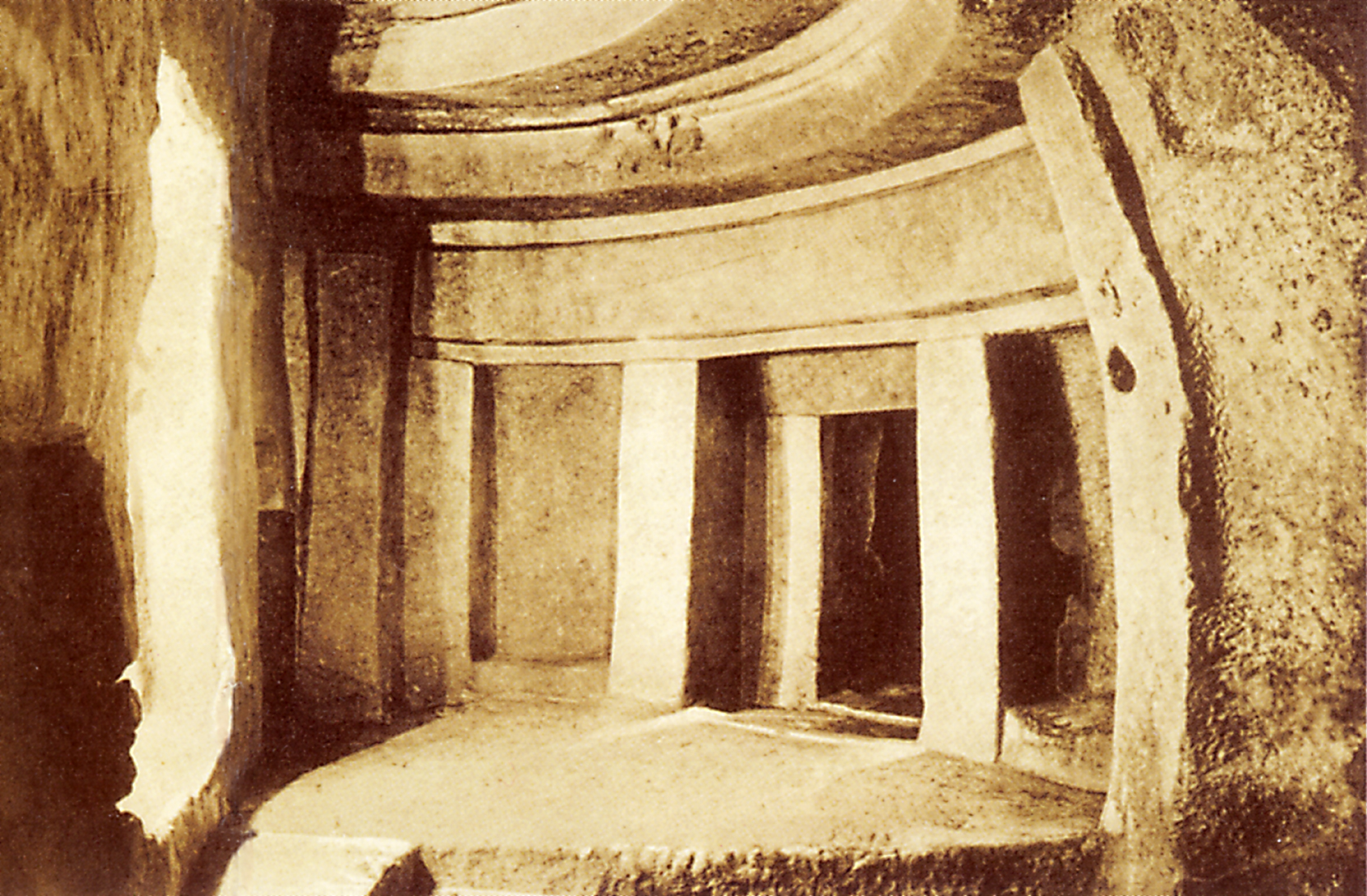
Maltese archeological site seems designed to shift brainwaves


Archeologists are beginning to think that certain ancient sites were designed to conduct and manipulate sound in order to shift people’s brainwaves and, thus, their consciousness (popular-archeology.com; thanks to Institute of Noetic Sciences newsletter for the find).

One fascinating example is the 6,000-year-old Hal Saflieni Hypogeum, the only prehistoric underground temple in the world, which is found on Malta.  This World Heritage site was discovered “by accident” in 1902.  Only 80 people a day are allowed entry.  It consists of three subterranean levels.  Some rooms are naturally-occurring caves that have been extended.  Some of the chambers have curved walls.


The temple was “created through the removal of an estimated 2,000 tons of stone carved out with stone hammers and antler picks. Low voices within its walls create eerie, reverberating echoes, and a sound made or words spoken in certain places can be clearly heard throughout all of its three levels”  (popular-archeology.com).


Malta temple expert Linda Eneix of the Old Temples Study Foundation reported that EEGs were done on volunteers listening to different sound frequencies while in the Hypogeum.  "The findings indicated that at 110 Hz the patterns of activity over the prefrontal cortex abruptly shifted, resulting in a relative deactivation of the language center and a temporary shifting from left to right-sided dominance related to emotional processing and creativity. This shifting did not occur at 90 Hz or 130 Hz......In addition to stimulating their more creative sides, it appears that an atmosphere of resonant sound in the frequency of 110 or 111 Hz would have been “switching on” an area of the brain that bio-behavioral scientists believe relates to mood, empathy and social behavior” (popular-archeology.com).


Similar observations have been made at archeological sites in Ireland, Turkey, and Peru.

Sound scientist Prof. Daniel Talma of the University of Malta explains: “At certain frequencies you have standing waves that emphasize each and other waves that de-emphasize each other. The idea that it was used thousands of years ago to create a certain trance – that’s what fascinates me” (thearrowsoftruth.com).

The Mediterranean Institute of Ancient Civilizations is conducting further research in archeoacoustics at the site (http://www.ancientmed.org/projects.htm).

In 1996, Prof. Robert Jahn of the Princeton Engineering Anomalies Research Lab and colleagues studied six ancient UK sites, and found that “each sustained a strong resonance at a frequency between 95 and 120 Hz, despite major differences in chamber shapes and sizes….Since the resonance frequencies are well within the adult male voice range, one may speculate that some forms of human chanting, enhanced by the cavity resonance, were invoked for ritual purposes” (Jahn et al., 1996).

I found the curved walls in the Hal Saflieni photos a little unsettling, but I am currently hypersensitive from neuro damage.  But, get a flashlight and look at your tonsils and the back of your throat.  It bears an uncanny resemblance to this architecture, which may have been intuitively or analytically shaped to maximize the shaping and projection of sound.


During the research for this essay, Google had a Doodle in honor of the Moog synthesizer, and mentioned subtractive synthesis.  The idea of subtractive synthesis is that a sound that is rich in harmonics can be shaped into a more specific sound by changing the shape of the “filter” (eg the human mouth and throat, or a proscenium), which subtracts some of the harmonics (Wiki).

The evidence that prehistoric temple builders were intentionally trying to control sound is further supported by Jahn et al.’s observation that:  “The resonant modal patterns all featured strong antinodes [the point of maximum amplitude of a sound wave] at the outer walls, with appropriately configured nodes [the point of minimum amplitude of a sound wave] and antinodes interspersed toward the central source. In some cases, interior and exterior rock drawings resembled these acoustical patterns” (Jahn et al., 1996)

In the 1980s, psychologist Howard Gardner argued that the prevailing IQ tests were only capturing a certain style of intelligence, and were missing many different types of intelligence that exist.  He proposed that there were several, relatively independent types of intelligence.  Three of the types he proposed may be particularly relevant to the acoustic discoveries at Hal Saflieni – intrapersonal intelligence, interpersonal intelligence, and musical intelligence.

Intrapersonal intelligence is the capacity to access one’s own feeling life, to discriminate among feelings, label them, utilize them in a symbolic way, and make meaning of them (Gardner, p. 239).

Interpersonal intelligence refers to the ability to observe and make distinctions about the moods, temperaments, motivations, and intentions of others (Gardner, p. 239).

Musical intelligence he defines as the ability to discriminate pitch, rhythm, and timbre, as well as skill at recognizing what constitutes a well-structured phrase or section of music (Gardner, pp. 104-105, 107-108)

One of the ways that Gardner defended his model was to collect evidence that there appeared to be faculties that could be destroyed or spared in isolation when there was brain injury.  In other words, these faculties seemed relatively autonomous (Gardner, p. 63).  Since the early 1980s, we have developed our understanding of brain function (less modular, more neural networks), and consciousness (not only in the head or body), but there is still some usefulness to these insights based on localization.

Here’s the interesting thing that may pertain to Hal Saflieni – The study of brain injuries suggested that intrapersonal, interpersonal, and musical intelligence are all strongly localized in the right hemisphere and in the frontal lobes (Gardner, pp. 118, 260-267). 

As Ms. Eneix noted above, the acoustics at Hal Saflieni appear to shift prefrontal cortical activity, deemphasizing language centers, shifting hemispheric dominance to the right, and activating areas associated with emotional processing, creativity, mood, empathy, and social behavior (popular-archeology.com).

So, sound could have been used at Hal Saflieni to increase people’s emotional and social intelligence, as well as to increase their ability to utilize the sound itself.  All these competencies would benefit from a right hemisphere, frontal shift.

Furthermore, repeated, ongoing exposure to this effect would go beyond shifting your state for a moment.  It would re-wire you to be a certain way via neuroplasticity.  A comparable effect to what we are hypothesizing for the congregants at Hal Saflieni has been observed in various recent studies of people who have had a prayer or meditation practice of many years duration.  Some studies suggest that, during prayer or meditation, experienced practitioners’ parietal lobes go dark – this lobe processes sensory information – and their frontal lobes light up – signifying focused attention…and perhaps signifying the activation of the personal and musical strengths mentioned above.  Other studies suggest that long-term practice sculpts the brain and creates systematic, enduring changes (Hagerty, NPR, 20 May 09).


“The church was packed to such an extent that the organ did not sound quite so grand as it did when the sanctuary was empty.  People, after all, absorb a great deal of sound.”

                        -- Graham Landrum, The Famous DAR Murder Mystery, p. 102


Thanks to Barbara Croner, MFT, for her contributions to this essay.


Sources:

Gardner, H.  (1985).  Frames of mind:  The theory of multiple intelligences.  Basic Books.

Hagerty, B.B.  (2009).  Prayer may reshape your brain….and your reality.  All Things Considered, NPR, 20 May 09. http://www.npr.org/templates/story/story.php?storyId=104310443

Jahn, R., Devereux, P., & Ibison, M.  (1996).  Acoustical resonances of assorted ancient structures.  J. Acoust. Soc. Am., 99, 649-658.  http://asadl.org/jasa/resource/1/jasman/v99/i2/p649_s1?isAuthorized=no

Landrum, G.  (1992).  The famous DAR murder mystery.  NY:  St. Martin’s Press.


Sunday, May 20, 2012

Elephants demonstrate extra-sensory connection with their human champion

This is re-posted from Rob Kerby, Senior Editor, beliefnet.com --

Author and legendary conservationist Lawrence Anthony died March 2. His family tells of a solemn procession of Elephants that defies human explanation.

For 12 hours, two herds of wild South African elephants slowly made their way through the Zululand bush until they reached the house of late author Lawrence Anthony, the conservationist who saved their lives.

The formerly violent, rogue elephants, destined to be shot a few years ago as pests, were rescued and rehabilitated by Anthony, who had grown up in the bush and was known as the “Elephant Whisperer.”

For two days the herds loitered at Anthony’s rural compound on the vast Thula Thula game reserve in the South African KwaZulu – to say good-bye to the man they loved. But how did they know he had died?

Photo of the elephants, posted by the family --


Known for his unique ability to calm traumatized elephants, Anthony had become a legend. He is the author of three books, Babylon Ark, detailing his efforts to rescue the animals at Baghdad Zoo during the Iraqi war, the forthcoming The Last Rhinos, and his bestselling The Elephant Whisperer.

There are two elephant herds at Thula Thula. According to his son Dylan, both arrived at the Anthony family compound shortly after Anthony’s death.

“They had not visited the house for a year and a half and it must have taken them about 12 hours to make the journey,” Dylan is quoted in various local news accounts. “The first herd arrived on Sunday and the second herd, a day later. They all hung around for about two days before making their way back into the bush.”

Elephants have long been known to mourn their dead. In India, baby elephants often are raised with a boy who will be their lifelong “mahout.” The pair develop legendary bonds – and it is not uncommon for one to waste away without a will to live after the death of the other.

But these are wild elephants in the 21st century, not some Rudyard Kipling novel.

The first herd to arrive at Thula Thula several years ago were violent. They hated humans. Anthony found himself fighting a desperate battle for their survival and their trust, which he detailed in The Elephant Whisperer:

“It was 4:45 a.m. and I was standing in front of Nana, an enraged wild elephant, pleading with her in desperation. Both our lives depended on it. The only thing separating us was an 8,000-volt electric fence that she was preparing to flatten and make her escape.

“Nana, the matriarch of her herd, tensed her enormous frame and flared her ears.

“’Don’t do it, Nana,’ I said, as calmly as I could. She stood there, motionless but tense. The rest of the herd froze.

“’This is your home now,’ I continued. ‘Please don’t do it, girl.’

I felt her eyes boring into me.

“’They’ll kill you all if you break out. This is your home now. You have no need to run any more.’

“Suddenly, the absurdity of the situation struck me,” Anthony writes. “Here I was in pitch darkness, talking to a wild female elephant with a baby, the most dangerous possible combination, as if we were having a friendly chat. But I meant every word. ‘You will all die if you go. Stay here. I will be here with you and it’s a good place.’

“She took another step forward. I could see her tense up again, preparing to snap the electric wire and be out, the rest of the herd smashing after her in a flash.

“I was in their path, and would only have seconds to scramble out of their way and climb the nearest tree. I wondered if I would be fast enough to avoid being trampled. Possibly not.

“Then something happened between Nana and me, some tiny spark of recognition, flaring for the briefest of moments. Then it was gone. Nana turned and melted into the bush. The rest of the herd followed. I couldn’t explain what had happened between us, but it gave me the first glimmer of hope since the elephants had first thundered into my life.”

It had all started several weeks earlier with a phone call from an elephant welfare organization. Would Anthony be interested in adopting a problem herd of wild elephants? They lived on a game reserve 600 miles away and were “troublesome,” recalled Anthony.

“They had a tendency to break out of reserves and the owners wanted to get rid of them fast. If we didn’t take them, they would be shot.

“The woman explained, ‘The matriarch is an amazing escape artist and has worked out how to break through electric fences. She just twists the wire around her tusks until it snaps, or takes the pain and smashes through.’

“’Why me?’ I asked.“’I’ve heard you have a way with animals. You’re right for them. Or maybe they’re right for you.’

”What followed was heart-breaking. One of the females and her baby were shot and killed in the round-up, trying to evade capture.

“When they arrived, they were thumping the inside of the trailer like a gigantic drum. We sedated them with a pole-sized syringe, and once they had calmed down, the door slid open and the matriarch emerged, followed by her baby bull, three females and an 11-year-old bull.”

Last off was the 15-year-old son of the dead mother. “He stared at us,” writes Anthony, “flared his ears and with a trumpet of rage, charged, pulling up just short of the fence in front of us.

“His mother and baby sister had been shot before his eyes, and here he was, just a teenager, defending his herd. David, my head ranger, named him Mnumzane, which in Zulu means ‘Sir.’ We christened the matriarch Nana, and the second female-in-command, the most feisty, Frankie, after my wife.

“We had erected a giant enclosure within the reserve to keep them safe until they became calm enough to move out into the reserve proper.

“Nana gathered her clan, loped up to the fence and stretched out her trunk, touching the electric wires. The 8,000-volt charge sent a jolt shuddering through her bulk. She backed off. Then, with her family in tow, she strode the entire perimeter of the enclosure, pointing her trunk at the wire to check for vibrations from the electric current.

“As I went to bed that night, I noticed the elephants lining up along the fence, facing out towards their former home. It looked ominous. I was woken several hours later by one of the reserve’s rangers, shouting, ‘The elephants have gone! They’ve broken out!’ The two adult elephants had worked as a team to fell a tree, smashing it onto the electric fence and then charging out of the enclosure.

“I scrambled together a search party and we raced to the border of the game reserve, but we were too late. The fence was down and the animals had broken out.

“They had somehow found the generator that powered the electric fence around the reserve. After trampling it like a tin can, they had pulled the concrete-embedded fence posts out of the ground like matchsticks, and headed north.”

The reserve staff chased them – but had competition.

“We met a group of locals carrying large caliber rifles, who claimed the elephants were ‘fair game’ now. On our radios we heard the wildlife authorities were issuing elephant rifles to staff. It was now a simple race against time.”

Anthony managed to get the herd back onto Thula Thula property, but problems had just begun:

“Their bid for freedom had, if anything, increased their resentment at being kept in captivity. Nana watched my every move, hostility seeping from every pore, her family behind her. There was no doubt that sooner or later they were going to make another break for freedom.

“Then, in a flash, came the answer. I would live with the herd. To save their lives, I would stay with them, feed them, talk to them. But, most importantly, be with them day and night. We all had to get to know each other.”

It worked, as the book describes in detail, notes the London Daily Mail newspaper.
Anthony was later offered another troubled elephant – one that was all alone because the rest of her herd had been shot or sold, and which feared humans. He had to start the process all over again.

And as his reputation spread, more “troublesome” elephants were brought to Thula Thula.

So, how after Anthony’s death, did the reserve’s elephants — grazing miles away in distant parts of the park — know?

“A good man died suddenly,” says Rabbi Leila Gal Berner, Ph.D., “and from miles and miles away, two herds of elephants, sensing that they had lost a beloved human friend, moved in a solemn, almost ‘funereal’ procession to make a call on the bereaved family at the deceased man’s home.”

“If there ever were a time, when we can truly sense the wondrous ‘interconnectedness of all beings,’ it is when we reflect on the elephants of Thula Thula. A man’s heart’s stops, and hundreds of elephants’ hearts are grieving. This man’s oh-so-abundantly loving heart offered healing to these elephants, and now, they came to pay loving homage to their friend.”


From South African news report posted on Youtube in Mar 09 –

Over the years, the initially mistrustful matriarch Nana has put her body between Anthony and charging stranger elephants, many times.

And in the interview, Anthony reports that, whenever he goes away on a trip, the day he returns, the elephants are found standing at his house!  (@ 6:00)


From his 8 Mar 12 obituary in The Telegraph –

….In 2003, as Anthony watched television footage of the bombardment of Baghdad, he recalled reading that the city had the largest zoo in the Middle East: “I couldn’t stand the thought of the animals dying in their cages. I contacted the Americans and the British and said, 'You have any contingency plans?’ Nobody was interested.”

Within days he was on the Kuwait-Iraq border, in a hired car packed with veterinary supplies. The Americans refused to let him cross, but Kuwaiti border guards allowed him through and, with two Kuwaiti zoo workers, Anthony joined the tanks and convoys heading to Baghdad.

When he arrived at his destination, in the ruins of the city’s once majestic al-Zawra park, he found a “horror story”. Met by a tearful Husham Hussan, the zoo’s deputy director, Anthony was initially tempted to give up….

Within weeks American and even Iraqi soldiers were putting down their weapons and mucking in: “We had Republican Guard soldiers working with American troops in the zoo two weeks after they were killing each other on the battlefield,” Anthony recalled. Local mullahs instructed their followers that Anthony and his team should be left unmolested…..


Additional sources --


Monday, May 14, 2012

Chip Coffey: Growing up psychic


Psychic and medium Chip Coffey has just published his book “Growing up psychic:  My story of not just surviving but thriving – and how others like me can, too.”  In it, he cogently sets forth a kind and intelligent way of helping children who are having psychic openings – usually distressing ones.  Chip Coffey is so relaxing, I wish I could be a psychic kid, so he could be my mentor.

He has also been the heart of the A&E TV series “Psychic Kids:  Children of the Paranormal.”  I think this show is just fantastic.  I cry every episode.  The kids and their parents go from being terrified and miserable to feeling deeply relieved and good about themselves.

Really, Mr. Coffey is doing an incredible service, filling a unique niche.  He’s educating children and parents about how to live a grounded, normal, happy, humanistic life with psychic abilities.  Societally, these abilities are currently teetering on the brink between being seen as evil, deluded, or deformed v. being seen as beneficent, evolved, and desirable.

I so admire his courage in taking up this mission.  Especially as a man.  Our society is becoming more open to psi, but he is still very much in the vanguard.  Our society is also becoming more aware of child abuse, which is a great thing, but it’s going through a phase of being knee-jerk mistrustful of men around children.  So, it’s very brave of him to be a psychic man who mentors children who are having difficulties with psi. 

He says he has some training and experience in psychology and counseling, and it shows.  I had wondered how he came to be so therapeutic with the kids on the TV series.  He has rock solid common sense, a superb set of values about what all children need, a nice sense of humor, and he’s very natural and humble.

One of the purposes of this blog is to defuse the conflation of psi and fear.  This book contributes to that project.  In the vast majority of childhood and teenage psi openings that Mr. Coffey encounters, the kids feel terrified, but there is, in fact, nothing to be afraid of.  Many times, they are being contacted by deceased humans who simply want to get a message through.  On one occasion, the presence that the child was scared of was actually a spirit guide.  There is the rare instance of a more aggressive being contacting a kid, but, even then, it does wonders simply to support the child's development of a healthy entitlement to self-respect, personal power, and boundaries.

Just for fun, here are a couple of the more unusual anecdotes from the book –

One mother reported that she was driving with her nearly non-verbal 11-month-old son in Alabama, when he suddenly started crying, and shouted, “Bad men on the plane!  Buildings going to fall!  Many people hurt!  Help them!” 

She was so shaken by hearing complete sentences from her 11-month-old that she pulled the car over.  The boy was still upset, so she turned the car radio on to find some soothing music.  As you’ve probably guessed by now, what she then heard on the radio was the breaking news of the attack on the World Trade Center.  The date was 11 September 2001.

This boy has since been diagnosed as autistic.  His mother says that he has precognitive, clairvoyant, empathic, and telepathic abilities.  Many people in her family history have had psychic abilities.  (pp. 12-13)

Another anecdote –

A 12-year-old boy was riding his bike, and was seriously injured when hit by a car.  He drifted in and out of consciousness for a bit, then, from his perspective, everything went blank, and he found himself out of body looking down on his body.  Then, he felt himself traveling fast through a white fog and tunnel.

Up ahead, he saw shadowy figures, and eventually drew close enough to see his grandmother.  He felt confused because he knew she had died a year earlier, but he was very happy to see her. 

She smiled, shook her head, and said, “Kylie, you really have to be more careful from now on when you’re riding that bike.”  She wrapped her arms around him, and hugged him close.

Suddenly, he felt a huge pain in his chest, and found himself in the back of an ambulance.

He recovered well, and told his parents about his experience.  It turns out that that the chest pain he had felt coincided with being defibrillated by the paramedics.  And his mother was stunned to hear of her deceased mother hugging her son, because, when she was finally allowed to see her injured son in the ER, she had leaned over to give him a kiss, and had smelled her mother’s perfume on him!

In the decade since his NDE, Kylie describes himself as having occasional precognition and clairsentience. (pp. 85-87)


Monday, April 30, 2012

The neurological relationship between fear and psi: A look at how the pineal gland and adrenal glands interact


I.  Are fear and psi closer neurologically than we realize?

In this blog, we have been trying to understand why neurological injury sometimes leads to a psychic opening; why people sometimes have frightening psychic openings or spiritually transformative experiences; and whether people are sometimes misinterpreting psi, usually in a fearful way.

Could it be that fear and psi are related to each other neurologically, and that’s part of why there is often confusion?

Two disclaimers –

First of all, psi and fear are everywhere in the neuroendocrine system – not to mention being non-local as well! --  but, today we’ll look at just one possible element of the complex set-up – the relationship between the pineal gland and the adrenal glands.

Secondly, as some have said throughout the history of parapsychology, including most recently James Carpenter with his First Sight model, psi is probably best understood as a basic aspect of how we know and act on the world, and it’s operating all the time.  But, today, we’ll look mostly at the role of psi as a survival skill, something that makes you more viable.


II.  The pineal gland –

i.  General info about the pineal

The pineal gland is an endocrine gland the size of a grain of rice in the middle of the brain.

In grad school in psychology in the ‘80s, the 788-page neurophysiology textbook we used had two paragraphs on the pineal gland.  Total!  And they were just about Descartes saying it was the seat of the soul.  Melatonin does not appear in the index.

Now, the pineal is conventionally recognized as a master gland because it regulates other endocrine glands via melatonin.  And frontier science is even more interested in the pineal because of its relation to various endogenous chemicals that might be involved in psi and expanded states of consciousness.


ii.  Pineal’s psi connection

The pineal gland has a long history of being associated with psi.  For one thing, it is located approximately behind the Third Eye (sixth chakra, Ajna).  It is light-sensitive – both via the retinas and directly (Elias, 2005).

“A parietal eye…or third-eye…is….present in some animal species [non-mammals]. The eye may be photoreceptive and is usually associated with the pineal gland, regulating circadian rhythmicity and hormone production for thermoregulation.” (Wiki)  But, all species have elements of a third eye and it's connected to the pineal gland.  (Brainard, 1996)

In many non-mammalian vertebrates, pinealocytes (the main cells of the pineal gland) have a strong resemblance to the photoreceptor cells of the eye. Some evolutionary biologists believe that the vertebrate pineal cells share a common evolutionary ancestor with retinal cells. (Wiki)

The pineal also produces, uses, or is hypothesized to produce several endogenous substances that alter consciousness and may be psi-conducive.

DMT – psychedelic, a key ingredient in Ayahuasca
5-MeO-DMT – psychedelic
pinoline -- chemically almost identical to key ingredients in Ayahuasca (Roney-Dougal, 2000)
bufotenine – shows similar effects to DMT
melatonin – circadian rhythms, sleep induction, dreaming, inversely related to onset of puberty
serotonin – does a million things, including affect perception.  Interestingly, it is related to a lot of these endogenous psychedelics and increased by them.  The serotonin system is also acted on by exogenous psychedelics like LSD.


III.  A brief word about the adrenals

The adrenal glands sit atop the kidneys in the middle of your back, and they do a lot of things, but, for our purposes today, they help the body handle stress by shutting down some functions and ramping up others, making the body more prepared for “fight or flight.”  Fear is, in part, a function of adrenal activity.

The adrenals produce many substances, including –

adrenaline (aka epinephrine)
noradrenaline (aka norepinephrine) (both adrenaline and noradrenaline are also produced elsewhere in the body)
glucocorticoids (including cortisol)


IV.  Fear is a survival signal that motivates greater psi

As Gavin de Becker says in his book “The Gift of Fear,” he developed the excellent intuition that has made him one of the premier security consultants on the planet because he had to in order to survive the violence in his childhood.  Survivors of child abuse often seem to develop great intuition, the ability for voluntary OBEs, and other psi capacities.

So, here we see an example of how fear may act as a survival signal that motivates the development of psi.

Interestingly, it turns out there is a pineal – adrenal connection.


i.  Effect of the pineal on the adrenals

The English parapsychologist, Serena Roney-Dougal, Ph.D. has done ground-breaking work on the pineal gland, integrating neuroscience and psi.  The pineal has been shown to have many influences on the adrenals (Elias, 2005), including an anti-stress function (Roney-Dougal, 2000).

For one thing, the pineal produces melatonin which regulates circadian and seasonal rhythms (Roney-Dougal, 2000).  Melatonin has an influence on the adrenals (Elias, 2005). 

Also, pinoline is produced by the pineal.  It is chemically nearly identical to active ingredients in Ayahuasca, implicated in dreaming, and thus, implicated in affecting our state of consciousness.  “Pinoline has its highest concentrations in the pineal and has been reported to fluctuate in phase with melatonin….Pinoline has also been shown to behave like a hormone (Airaksinen et al 1984) and specific binding sites for pinoline exist in the adrenals as well as the pineal and the brain”  (Roney-Dougal, 2000)


ii.  Effect of the adrenals / other adrenergic sources on the pineal

The main activation of the pineal is definitely via adrenergic systems (Roney-Dougal, 2000), but there is some debate about how directly the adrenals influence the pineal.  Adrenergic systems means sources of adrenaline and noradrenaline, but these two substances are produced both by the adrenal glands and in the nervous system. 

The U.S. psychiatrist Rick Strassman, MD did historic research on DMT in the 1990s.  In his 2001 book on his research, “DMT:  The spirit molecule,” he reports that only adrenaline and noradrenaline produced in the brain near the pineal, are able to reach the pineal (Strassman, 2001, pp. 63-64).  However, I have to wonder if this is the whole story, and whether the adrenals might have a direct influence, or whether they have an indirect influence, such as, say, stimulating the central nervous system to innervate the pineal.

Jordanian neurosurgeon Munir A. Elias, MD has written a wonderfully clear summary of the current state of knowledge (not including psi!) about the pineal, and he says information on the pineal is expanding rapidly in recent years, and there is still much to clarify.  “From the little structure that seemed to do nothing except give rise to difficult tumors, the pineal has emerged as a central organ in human physiology. Consistent with the evolving holistic picture of the organism, the pineal defies understanding if conceptually relegated to one system or function”  (Elias, 2005).

Regarding the relationship between the pineal and the adrenals in particular, “the contradictory nature of the results obtained so far make it difficult to draw any definitive conclusions about the pineal-adrenal axis” (Seijan et al., 2008).

There appears to be some research suggestive of direct adrenal influence on the pineal.  Glucocorticoids are substances produced by the adrenals, and there are glucocorticoid receptors in the trout pineal (Benyassi et al., 2001).  And, research has also suggested that glucocorticoids modulate pineal activity to relieve stress in goats (Seijan et al., 2008).

But, for sure, we know that adrenergic systems (CNS adrenaline and noradrenaline) do influence the pineal directly.

In a moment, we’ll look more at the possibility that direct adrenal influence on the pineals is made more likely by neuroendocrinological damage caused by, say, antidepressants.


V.  We misinterpret psi  because it feels like fear and uses similar neuroendocrine pathways to fear

So maybe we’re neurologically designed to respond to fear with greater psi.

Concomitantly, because psi and fear may be closely linked neurologically, we might be more easily confused by psi, and misinterpret it as anxiety signals, because it *feels* similar, and uses similar neuro-endocrinological pathways.

Just as excitement and anxiety share some psychoneurological features, and can be confused one for the other, so it may be with psi and fear.

Another disclaimer – there are many psychological reasons why people fear psi.  Today, we’re just looking at one possible neuroendocrinological pathway.

Now, if the psi opening is gradual and the fear is moderate, this can all be sorted out.

But, what happens if the psi opening is big and abrupt, or the fear is great?  Physical or psychological trauma – illness, accidents, abuse – can cause abrupt psi openings and / or a lot of fear.  What might be happening neurologically in this case?


VI.  Trauma (psychological or physical) causes dysfunction

i.  Cyclicality

The pineal is a photo-neuroendocrine transducer.  Environmental energy – in the form of light, other parts of the electromagnetic spectrum, and geomagnetism -- influence the pineal to produce its substances, which then have widespread influences throughout the body (Elias, 2005, Roney-Dougal, 2000).

Regular, smooth cyclicality in response to zeitgebers (time-givers, environmental cues) is crucial to optimal health.  Food is a zeitgeber for another system in the body.  Light and EM are the cues for the pineal, retinas, and associated parts of the brain (Roney-Dougal, 2000).

There are all sorts of cycles in the body.  Cycles are how we live in the body, and in time and space.  Every heart beat is a cycle.  There is the Basic Rest Activity Cycle, which lasts 90 minutes, and repeatedly alternates between higher activity and greater rest 24 hours a day.  And there are circadian, lunar, seasonal, and lifespan (eg puberty) rhythms.

There is ample evidence that when smooth cyclicality of pineal functioning gets disrupted in any way, it leads to some kind of disorder (Couto-Moraes et al., 2009; Elias, 2005; Groenendijk, 2001; Roney-Dougal, 2000).  “…[I]njury disconnects the organism from environmental cycling, while recovery restores the light/dark information to the whole organism” (Couto-Moraes et al., 2009).

Cyclicality can be disrupted by physical or psychological trauma.  That trauma can be acute or cumulative.  Cyclicality can also be disrupted by the common psychoneurological damage created by lifelong repressive socialization.

These traumas or repressive socialization, and the disruption to the pineal they cause, can lead to an inflexibility of consciousness that is either too shut down or too stuck on one setting.


ii.  Calcification

To further demonstrate that smooth, cyclical, flexible functioning of the pineal appears to be what is desirable, let us also consider the evidence that calcification of the pineal causes disorders.

One study suggested that the normal pineal grows from birth to age 2, with no apparent growth from age 2 – 20.  There was also progressive calcification to age 30; then the calcification stops progressing (Sumida et al., 1996).

A summary of one collection of research studies on pineal calcification paints a picture.  The research suggests calcification may be associated with melatonin deficiency, circadian timing irregularity, insomnia, gradual onset schizophrenia, tardive dyskinesia, Alzheimer’s, Parkinson’s, stroke, and other disorders.  It may be made worse by fluoride, and living in an industrialized society.  In gerbils, the pineal may form calcium concretions in response to stress.  (greenmedinfo.com)

Several studies suggest that pineal calcification correlates with signs and symptoms of schizophrenia (http://www.ncbi.nlm.nih.gov/pubmed/8063514?dopt=Abstract, http://www.ncbi.nlm.nih.gov/pubmed/1342008?dopt=Abstract, http://www.ncbi.nlm.nih.gov/pubmed/1979971?dopt=Abstract), but they raised a serious question for me.  The studies were done on people with schizophrenia in institutions, and the odds are very high that these people were taking toxic psychiatric medications, or in withdrawal from them.  So, at this point, it is an open question how much of pineal calcification is due to schizophrenia and how much is due to toxic drugs.

The fact remains that there is evidence to suggest that calcification of the pineal may be one of the mechanisms that interferes with cyclicality and flexibility.

As just one example of how physical trauma can affect the pineal and the adrenals, psi and fear, let us look briefly at the specific case of antidepressant medication.  Cyclicality is definitely affected; calcification is hypothesized.


iii.  SSRI Antidepressants

Selective Serotonin Reuptake Inhibitor antidepressants are supposed to work by forcing more serotonin to stay available in the neuronal synapses.  However, the human body won’t be pushed around this way, and immediately starts to compensate by removing serotonin receptors.  Ha! Take that!  Meanwhile, a cascade of myriad neuroendocrinological effects follow from this chemical manipulation (which often goes on for years), causing neuronal pruning, damage, and death in some areas, promoting neurogenesis in others, overwhelming the liver’s capacity, turning up and down endocrine glands, etc., etc.


1.  Effects of taking antidepressants

Charly Groenendijk, a Dutch antidepressant survivor and remarkable researcher, has written an excellent article on antidepressants and the pineal (Groenendijk, 2001).  He points out how SSRI antidepressants interfere with natural bodily cycles.  The medication, which is always taken daily and ongoingly, forces serotonin to be continuously available, and to ignore natural biorhythyms. 

Groenendijk also makes a good case for antidepressants causing pineal calcification, based on research linking calcification, tardive dyskinesia, serotonin, melatonin, dopamine, and anti-psychotic medication (Groenendijk, 2001).

The pineal is the richest site of serotonin in the brain (Groenendijk, 2001).  “The concentration of serotonin in the pineal is 250 times greater than that in any other region of the brain” (Elias, 2005).  There is some research to suggest that antidepressants do increase pineal functioning (Brown et al., 1996).

Serotonergic drugs also have a direct impact on the adrenals.  There are serotonergic cells in the adrenals (Delarue et al., 1998).  There is widespread clinical anecdotal evidence for some sort of adrenal fatigue that becomes more pronounced the longer the drugs are taken (Groenendijk, 2001).

Serotonin itself is involved in so many functions that it’s mind-boggling.  One of them is perception.  Also, both melatonin and pinoline are made from serotonin.  What happens to consciousness and perception when production of these substances that are related to dreaming and non-waking reality is tampered with?  (Groenendijk, 2001)

During prolonged use, people become insidiously disconnected from their feelings, apathetic, sleep and dreaming are affected, consciousness is dulled.  Generally speaking, I suspect that psi development become stalled or suppressed.


2.  Effects of withdrawing from antidepressants

Now, hard as these drugs are on the body, withdrawal from them is even harder.  The body has become dependent on regular doses of the drugs, and many semi-permanent neuroendocrinological changes have been made.  When you remove the drug, there is rebound and chaos, until the body slowly makes changes yet again, and reestablishes a new homeostasis.

The pineal processes huge amounts of serotonin.  The adrenals become depleted.  Serotonin and chemically related endogenous substances are interfered with by the drugs.  What happens to consciousness, perception, fear, and psi when you take the drugs for a significant length of time and then stop?

Many people have a severe, prolonged reaction to stopping these drugs, even if they taper off them extremely slowly.  They often experience neuroendocrinological chaos, including symptoms of adrenal hyperactivity and astronomical anxiety.  The subjective experience has often been compared to a protracted LSD trip – a bad one -- initially intense, and then progressively diluted.  Depersonalization / derealization are common, sleep and dreaming are affected, perception and consciousness are very distorted.  Some people experience an abrupt psi opening early in the removal of the drugs, followed by a chaos of indistinguishable fear and psi, followed by slowly emerging psi capacities.

As a sidebar, I’m not sure what to make of this, but it may be evidence that exposure to and withdrawal from psychoactive medications has an impact on cyclicality as it relates to fear.  I know three people, including myself, who have withdrawn from these medications and who now become anxious or agitated at a particular time of day, every day, predictably – 10:30 am for me, 2 pm and 6 pm for the other two.  It’s easier to see that this is probably related to something like a diurnal cortisol cycle (adrenals).  But might it also be tied to a pineal cycle (via melatonin for example) and be a time of heightened psi?


VII.  How it works when it’s working well or even better than well

Up to this point, we’ve explored the possible neuroendocrinological connection between fear and psi, including the possible nature of the relationship between the pineal and the adrenals.  We’ve considered that it may be evolutionarily adaptive for fear to trigger psi, and that this provides a pathway that could also be ripe for misinterpretation, where psi would trigger fear.  We’ve speculated that smooth cyclicality and non-calcification are important for pineal health. And we’ve looked at SSRI antidepressants as just one example of how physical or psychological trauma could damage the system and impair our relationship with our own psi.

How is it supposed to work when it’s all systems go?  And can we go beyond fear and using psi to survive to using psi to thrive?  Does the survival version of psi give us insight into the thriving version of psi?


i.  A gateroom of one’s own

Biologist J.V. Wallach has articulated a fascinating theory about endogenous hallucinogens that may help us. 

In the words of radical psychiatric survivor d_vyne_madnesss:  “[The] 'reality' we take to be 'normal' and 'objective' may in fact be rather a controlled psychedelic experience!…

“Wallach proposes that…waking consciousness can be thought of as a controlled psychedelic experience. When the control of these normal systems of perception becomes loosened and their behavior no longer correlates with the external world, then altered states arise. 

“Translated, what this suggests is that consciousness, the waking state we take as a 'given' and that feeds us information about the physical world, is itself a kind of hallucination that is fed to us in a controlled way by the pineal gland. Changing the dosage and timing results in a completely different experience (the aliens, the tunnel of light), raising the question of, which experience is real?”  (d_vyne_madness, 2009).

And in Wallach’s own words:

“Researchers have been puzzled over the role of the endogenous hallucinogens for over 50 years. The endogenous hallucinogens have been hypothesized as playing roles in phenomena such as dreaming, near death experiences, psychosis and more recently even UFO abduction experiences. All of these experiences represent altered states of consciousness (ASC). These ASC are conditional on the existence of a standard waking state. Endogenous hallucinogens may be involved in the above ASC as well as others, however I propose that it is the role these chemicals play in ordinary sensory perception that allows them to precipitate in the ASC as well.  Dreaming, psychosis and out of body experiences arise when the release of endogenous hallucinogens is not correlated with external events. In this theory waking reality is created in a similar way to altered states except that the normal state correlates with events in the “physical” world. Thus waking reality can be thought of as a tightly regulated psychedelic experience and altered states arise when this regulation is loosened in some fashion”  (Wallach, 2009).

Note how this parallels Carpenter’s First Sight model in its implication that psi processes may underlie all of psychological experience, not just the anomalous events.  Then, the pineal (and undoubtedly it is a lot more complicated than this) dials the type of consciousness / reality that is called for at any given moment.

If you’ll forgive me a moment of Sci Fi geekiness here, this reminds me of the Stargate movie and TV series.  The pineal is analogous to the “Gate Room,” where the Stargate can be dialed to access different wormholes.  Most of the time, the wormholes lead to different, faraway places.  Occasionally, they lead to different times or different timelines.

Likewise, the pineal may dial different internal states *and* different external realities.  In his dramatic DMT research, Strassman started from the position that his subjects were accessing different internal states while on DMT, but eventually became convinced that they were actually accessing different external realities.  As one of his subjects commented, “…there is infinite variation on reality.  There is the real possibility of adjacent dimensions” (Strassman, 2001, p. 195).

Strassman speculates that DMT may be produced all the time. He suggests that not enough DMT and you'll feel life has no meaning; just the right amount and you'll be tuned into normal reality as we are used to it; more DMT and you will tune into aspects of reality we don't have access to as often (Strassman, 2001).

The body is designed to produce psychedelics and access other realities.  This capacity can become distorted, damaged, *and* activated by physical or psychological trauma.  When it is stimulated by trauma, you might get a psi opening that is partially distorted, as in the case of psychosis.  Or you might get a psi opening that is limited to a focus on danger.  For example, abuse survivors sometimes have an advanced ability to detect danger, but it’s harder for them to detect fun. 

The problem with big, disjunctive psi openings is that the individual has to catch up psychoneurologically.  Until one does, you get the confusion between psi and fear that we’ve been talking about above.


ii.  Maturation of the pineal

Ideally, the pineal is supposed to mature slowly.  This allows for psychoneurological growth, adjustment, working through of new understandings, new identities, and new capacities.

Psychologist and Kundalini scholar Stuart Sovatsky, Ph.D. proposes that there are, in fact, many different puberties that an individual can go through.  This fits nicely with the general idea that a Kundalini awakening is a developmental leap.  We know that the pineal, via melatonin, is implicated in puberty.  Sovatsky goes further and believes that the pineal, itself, matures over the entire lifespan, and that the more mature the pineal (and the more efficacious its productions of various substances), the more consistent the state of awakened consciousness (Sovatsky, 1998).

The master shaman exhibits a smooth, cyclical, integrated dialing among different realities.  This mature, evolved person is able to operate successfully in the workaday world *and* navigate expanded states of consciousness on a regular basis.  (Roney-Dougal, 2000).  This person is adaptable, flexible, and thriving with psi.


iii.  All systems go

What, if anything, does the present theory of survival psi and confusion of fear with psi tell us that is helpful in moving toward thriving with psi?  After all, to this point in our evolution, it seems that fear of psi, blocks to psi, being overwhelmed by psi are all more common than smooth maturation of psi.

There are some people who seem to come into this world with their psi capacities starting active and staying active.  But, it is still appears to be more common for people to get off the track of natural psi maturation, and to shut down any development of their capacities beyond that which is considered normal by society.

However, the natural developmental thrust is always there waiting.  The individual wants to develop, and probably the universe and the collective consciousness need the individual to develop.  So, many things can be enlisted to re-activate the dormant development.  Ideally, love and empathy can do the job.  But, so can trauma. 

To paraphrase Dr. Johnson, the threat of death focuses the mind wonderfully.  And, in this case, a threat to survival may reveal the heretofore hidden path to thriving with psi.  A trauma may activate the hypothesized fear – psi pathway in the body, initially to master the trauma.  But, having been activated, this pathway may now be more available for further use and development.  We can move even further into our birthright, refining our innate psychic potential – not only for survival, but for joy.  We can facilitate the maturation of the fear – psi pathway into something that is also an excitement – psi pathway.


=========

Thanks to Tom Ruffles for pointing me to Serena Roney-Dougal’s work on the pineal.


Sources:

Benyassi, A., Schwartz, C., Ducouret, B., & Falcón J.  (2001).  Glucocorticoid receptors and serotonin N-acetyltransferase activity in the fish pineal organ.  Neuroreport, 12, 889-92.  http://www.ncbi.nlm.nih.gov/pubmed/11303753

Brainard, G.C.  (1996).  Light and melatonin:  Exploring the healing potential of the human pineal gland.  The Center for Frontier Sciences Lecture Series.

Brown, G.M., Singer, W., & Joffe, R.  (1996).  Lack of association between thyroid and pineal responses to antidepressant treatment.  Depression, 4, 73-76.  http://www.ncbi.nlm.nih.gov/pubmed/9160644

Couto-Moraes, R., Palermo-Neto, J., & Markus, R.P.  (2009).  The immune-pineal axis: stress as a modulator of pineal gland function.  Ann N Y Acad Sci.,1153,193-202.

Delarue, C., Contesse, V., Lefebvre, H., Lenglet, S., Grumolato, L., Kuhn, J.M., & Vaudry, H.  (1998).  Pharmacological profile of serotonergic receptors in the adrenal gland.  Endocr Res., 24, 687-94.  http://www.ncbi.nlm.nih.gov/pubmed/9888560

d_vyne_madness.  (2009).  Is 'ordinary' reality a controlled psychedelic experience?

Elias, M.A.  (ca. 2005).  Physiology of the pineal gland.

Groenendijk, C.  (2001).  Serotonin and the pineal gland.  http://www.antidepressantsfacts.com/pinealstory.htm

Hanna, J.  (2001).  DMT and the pineal:  Fact or fiction?

Korf, H.W., Schomerus, C., & Stehle, J.H.  (1998).  The pineal organ, its hormone melatonin, and the photoneuroendocrine system.  Berlin:  Springer.

Roney-Dougal, S.  (ca. 2000). Walking between the worlds:  Links between psi, psychedelics, shamanism and psychosis, an overview of the literature.

Seijan, V., Srivastava, R.S., & Varshney, V.P.  (2008).  Pineal-adrenal relationship: modulating effects of glucocorticoids on pineal function to ameliorate thermal-stress in goats.  Asian – Australasian Journal of Animal Sciences, July 2008.  http://findarticles.com/p/articles/mi_6917/is_7_21/ai_n29466627/?tag=content;col1

Sovatsky, S.  (1998).  Words from the soul:  Time, East / West spirituality, and psychotherapeutic narrative.  Albany:  SUNY Press.

Strassman, R.  (2001).  DMT:  The spirit molecule.  Rochester, VT:  Park Street Press.

Sumida, M., Barkovich, A.J., & Newton, T.H.  (1996).  Development of the pineal gland:  Measurement with MR.  AJNR, 17, 233-236.  http://www.ajnr.org/content/17/2/233.full.pdf

Wallach, J.V.  (2009).  Endogenous hallucinogens as ligands of the trace amine receptors: A possible role in sensory perception.  Medical Hypotheses, 72, 91-94.
endogenous+hallucinogens&hl=en&gl=us


Wednesday, April 4, 2012

Laura Bruno – TBI survivor & medical intuitive

Laura Bruno was an empathic and sensitive child, who didn’t feel encouraged to view these traits as something positive to be developed.  Despite a secret yearning for a spiritual career, she got a Master’s in English and went to work in a corporate sales setting.  There, she used prayer to request guidance, and had uncanny success at sales.

She was accepted at a doctoral program in English, with full fellowships, and was due to begin it in three months, when she had a serious car accident in May 1998 at the age of 24.  She had a traumatic brain injury (TBI) that completely stopped her life.  She had to give up her fellowship.  She couldn’t read for more than five minutes without getting a migraine.  She was speaking incoherently at times without even realizing it.  She had to lie on the couch with an ice pack non-stop for months.  She was not given much hope for help by conventional medicine.  She turned to alternative healing and a spiritual approach.  It took her six years to recover.

During her neurological recovery, she experienced a dramatic opening of her psychic abilities.  She started having sudden, unsought, accurate intuitions about the medical conditions of others.  What would happen is that she would get migraines that were particularly intense, even for her.  And they would intensify progressively, until she “agreed” to relay the information to the person with the medical condition, at which time the migraines would abate.  Interviewer Kristin Suratt points out that accepting that one is a medical intuitive is a scary proposition, because “suddenly you have to really trust your intuition.”  Bruno adds that, at first, she received medical intuitions only about life-and-death situations.  This made the stakes high in a couple of ways -- interfering in the life of someone vs.risking their death; the risk of turning your own life into a non-stop, dramatic, exhausting rescue mission.

On the contrary, when she finally accepted and revealed her ability, she also developed much more control over turning it on and off, or what she calls “Stand by,” where it wasn’t taking over her life any more and she wasn’t suddenly getting hits that she had to urgently find and communicate with people.  Instead, she made a way to be available (starting a business, a website), and found people were contacting her earlier in their illnesses so preventive work was possible.

(This is a classic example of a shamanic call.  You can see many examples in Holger Kalweit’s “Dreamtime and Inner Space” of people minding their own business, then struck down by a mystery illness, then getting the message that they were supposed to be shamans, then resisting that message, then discovering that they got relief from their symptoms only when they submitted and agreed to “shamanize,” be that working with herbs, prophecying, healing, etc.  You can also see the same pattern vividly in the case of Laura Alden Kamm, another medical intuitive who shook for three years during her *second* bout of neurological problems, and discovered she would stop shaking only while she worked as an intuitive.)

One day, out of the blue, Laura Bruno’s holistic vision and brain injury specialist offered to give his practice to her when he retired.  She had no idea why he was saying this.

“He explained that he and his assistant had noticed ‘the next three patients after’ me ‘always made amazing progress.’ ‘Great,” I said, ‘What’s that got to do with me?’ He answered, ‘For weeks we’ve purposely mixed things up and no matter which three patients follow you, they always make amazing progress. You leave an energy residue in the room that lasts at least three hours’” (mind-energy interview).  (This creation of a temporary, localized field effect has been observed by other parapsychology researchers.)

Bruno studied Reiki, and used it to wean herself completely off pharmaceutical migraine pills.  She is a Master Reiki teacher and healer.  She encourages “people in chronic physical or emotional pain to take at least a Reiki Level 1 class because it empowers them to treat themselves instead of relying on someone else for relief and support. Changes in students’ lives are very interesting—sometimes dietary shifts, career switches and enhanced intuition” (mind-energy interview).

As a medical intuitive, she tunes into a person’s energy field and intended life path to find the root cause of their symptoms.  “Our bodies never betray us—instead they attempt to speak to us when we’ve ignored our soul’s messages in every other form” (mind-energy interview).

She’s also an animal communicator and here’s her interesting description of the process:  “It’s primarily a telepathic process. First, I ask the animal’s permission to engage in conversation. I’ve had animals ask me to “check back later,” but none has ever told me “no.” I enter a meditative state and tune into the animal’s soul and Essence. The process feels like letting down all the walls of separation, so that I just “melt” into whatever or whomever wants to communicate. I then upload and download visions, phrases, feelings, memories—whatever wants to reveal itself—similar to searching the internet with multiple browsers open. If an owner asks specific questions, it’s like running a search on Google and retrieving answers in order of relevance. Done telepathically, this happens quickly—especially since most animals use images rather than words to communicate” (mind-energy interview).

She says cats are often more highly conscious animals who tend to want to communicate at a more complex level!  :)  Some animals ask for ways they can enhance their human’s progress.

Asked what message she would give based on all her experience, she said the same thing Anita Moorjani brought back from her NDE:  “You are loved and you are Love.”

From talking with many brain injury survivors, Bruno has come to the conclusion that there is a “brain injury profile.”  She thinks people who end up getting a brain injury are often very advanced in a lot of areas of their lives, but not well-integrated.  She says the injury initiates a journey of integration – you’ve got all the parts, but they’re not working together.

She proposes that part of the purpose of these experiences is to change something that needed to change in the person’s life.  Regarding both the complexities of brain injury and other “mystery illnesses,” she says,“People that have something that no one can figure out, then usually it’s not about figuring it out.  It’s usually about the process” (Surratt kzyx interview).

Bruno also addresses the fear that comes with any neuro-damage-induced psychic opening:  “When a stroke, brain injury or other neurological condition suddenly opens pathways you never knew existed, you might feel tempted to “turn things off.” Indeed, many people contact me because they don’t know how to handle the onslaught of psychic awareness. ‘How do I tune stuff out?’ they ask. ‘I don’t wanna know these things!’”  (LB blog, 29 Dec 08).

She counsels that trying to shut it down or ignore it will actually increase your fear, basically because you will still be vaguely aware of the information flow, but now you are even less conscious of it or able to work with it.  It’s comparable to walking into a new environment with your eyes closed.

Instead, she recommends grounding and centering, especially on the heart chakra, using meditation or chanting.  Try to have fun, ask for synchronicities, ask for guidance, and if necessary ask for clarification of the guidance.

“Consider that the words “scared” and “sacred” contain all the same components, just slightly rearranged. We do not need to remove things in order to make them holy. We need only shift perspective” (LB blog, 29 Dec 08).


Sources:

Dec 2007 interview by Jacob --
http://www.mind-energy.net/archives/258-Interview-with-Laura-Bruno.html

May 2009 interview by Kristin Suratt --
http://files.welikeitraw.com/audio/laura-bruno-kzyx.mp3

http://laurabruno.wordpress.com/2008/12/29/concussions-brain-injury-and-spirituality/

http://www.ifionlyhadabraininjury.com/


For more, see Laura Bruno on IAWP